
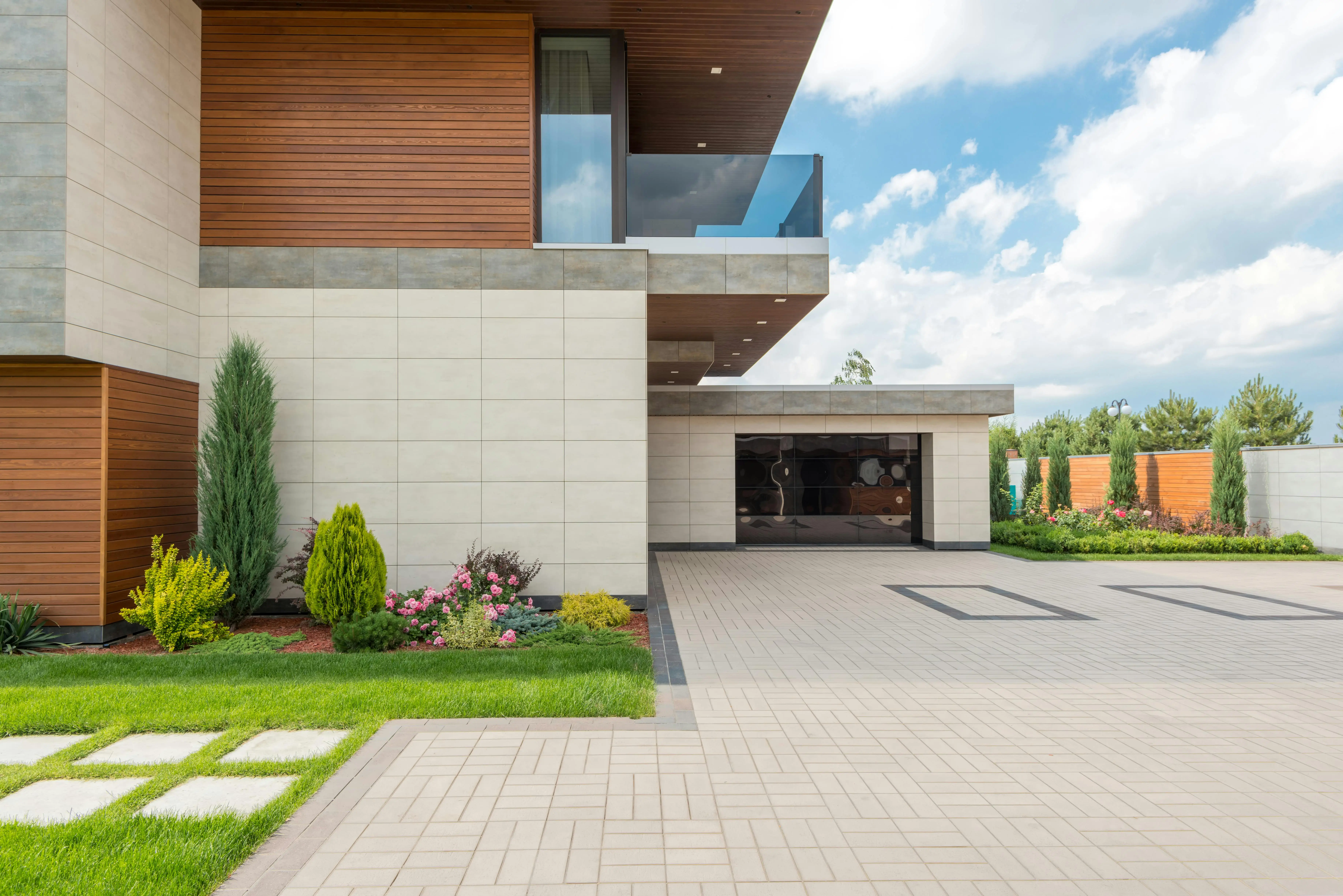
A driveway looks innocent enough—until the first spider-web crack turns into a pothole the size of a salad plate. Knowing when to hire a professional for driveway repairs saves you money, protects curb appeal, and keeps the HOA letters out of your mailbox. This guide walks you through the warning signs, cost factors, and DIY limits so you can make the call before small headaches become big expenses.
Know Your Driveway: Common Materials & Typical Trouble Spots
Repair timing starts with understanding what you’re standing on. Each surface fails differently.
Asphalt (Blacktop)
- Life span: 15–20 years with sealcoating every 2–3 years
- Red flags: Alligator cracks, raveling (loose gravel on top), potholes, fading to light gray
Concrete
- Life span: 25–30 years
- Red flags: Spalling (flaky surface), joint separation, sinking slabs, oil-etched discoloration
Pavers & Brick
- Life span: 30–50 years if the base stays put
- Red flags: Wobbly units, moss in joints, edge restraint failure, dips near downspouts
Gravel
- Life span: Indefinite—needs annual refresh
- Red flags: Ruts deeper than 1", washouts, weeds, "moon dust" that tracks into the garage
Warning Signs You Should Call a Pro—Now, Not Next Spring
Cracks Wider Than ¼-Inch
Hairline surface crazing is cosmetic. Anything you can slide a coin into is structural. Openings let water reach the sub-base, where freeze-thaw cycles turn a ¼-inch gap into a canyon over one winter.
Potholes or Depressions
These mean the base has washed out or compacted unevenly. A pro can cut out the section, stabilize the sub-grade, and patch so it doesn’t return next month.
Drainage Drama
Standing water 24 hours after a storm is a red carpet for cracks and mosquitoes. Pros re-establish pitch or install trench drains without undermining the slab.
Sinking or Heaving Slabs
If one section is ½-inch lower than its neighbor, you’ve got soil settlement or tree-root incursion. Mud-jacking or slab-jacking requires pumps and Portland cement grout—well beyond a bag of Quickrete.
Spalling or Flaking Surface
Top-layer failure usually points to freeze-thaw damage or a bad initial mix. Resurfacing needs polymer-modified overlays and primer that bond at 4,000 psi—equipment most homeowners don’t store next to the lawn mower.
Edge Breakdown
Driveway edges bear 30% of vehicle load but get zero support once soil erodes. Pros install compacted backfill and edge restraints that stop further crumbling.
DIY Limits: What Homeowner Kits Can & Can’t Do
Patch Kits Work For…
- Cracks < ¼-inch in asphalt: Use rubberized crack filler and a $25 pour pot.
- Isolated concrete pop-outs: Vinyl concrete patch, 2 sq ft max.
- Loose paver: Pull, re-level bedding sand, tamp by hand.
Stop and Call When…
- Damage covers more than 10% of total driveway area.
- Multiple cracks intersect (map cracking)—this signals base failure.
- You need a compressor, plate compactor, or diamond-blade saw for more than one afternoon.
- Driveway is older than 75% of its expected life—piecemeal repairs waste money.
Rule of thumb: If the repair bill exceeds 30% of replacement cost, opt for a new install.
What Professional Driveway Repairs Cost in 2024
Prices vary by region, but national averages give you bargaining power.
Asphalt Repairs
- Crack fill: $0.50–$1.00 per linear foot
- Pothole patch (hot mix): $100–$150 per ton installed
- Skin patch/overlay (1½-inch): $2–$3 per sq ft
Concrete Repairs
- Joint/crack seal: $2–$4 per linear foot (polyurethane)
- Slabjacking: $3–$6 per sq ft ($300–$600 typical 200 sq ft section)
- Partial replacement: $7–$12 per sq ft (includes demolition, new wire mesh)
Pavers & Brick
- Re-leveling & re-sand: $4–$7 per sq ft
- Replacement of 10% of units: $8–$14 per sq ft (includes matching new units)
Hidden Extras to Budget
- Driveway sealing afterward: $0.15–$0.25 per sq ft
- Permit fees: $50–$200 in many cities
- Base stabilization (geo-grid): $2 per sq ft
Money-saving tip: Schedule off-season (late fall or early spring) when crews are hungry and asphalt plants lower their minimum load charges.
Finding the Right Driveway Pro: 7-Point Checklist
1. License & Insurance
Ask for proof of general liability and workers’ comp. A legitimate contractor emails certificates without hesitation.
2. Specialization
Hire an asphalt crew for asphalt, concrete flatwork specialists for concrete. "Jack-of-all-pavement" companies often subcontract—clarify who’s on site.
3. References & Portfolio
Drive by past jobs older than 3 years. Smooth edges and uniform color mean they compacted in lifts and used quality sealer.
4. Written Scope
Insist on square footage, repair method, base thickness, and type of sealer or mix design (e.g., 9.5 mm Superpave for asphalt, 4,000 psi concrete with 5–7% air entrainment).
5. Warranty
One year is standard; three years is excellent. Read the fine print—some void coverage if you don’t sealcoat on schedule.
6. Payment Schedule
Never pay more than 30% up front. Final 10% should be due after you inspect the work and receive lien waivers.
7. Online Reputation
Look beyond star count. Recent 1-star reviews about "cracks came back in 6 months" are more telling than a 2018 complaint about scheduling.
Timing Matters: Best Seasons for Driveway Repairs
Asphalt
Needs ground temps ≥ 50°F and rising. Book 2–3 months ahead if you want a fall slot—everyone races before frost.
Concrete
Pour between 45°F and 85°F with low wind. Mid-summer pours require evaporation retarders and burlene curing blankets—another reason to hire pros.
Emergency Fixes
Winter potholes? Request a cold-patch as a band-aid, then schedule hot-mix repair for spring. Cold-patch is temporary; it pops out under snow-plow blades.
Preventive Tactics to Push Repairs 5–10 Years Down the Road
- Sealcoat asphalt every 2–3 years; concrete every 5–7 years with penetrating silane-siloxane.
- Keep gutters clean so downspouts don’t flood the corner of the drive—add extensions that dump water 5 ft away.
- Scatter calcium chloride instead of rock salt; salt eats concrete and weakens asphalt bond.
- Limit heavy trucks (concrete mixer, dumpster) to occasional use; distribute load with plywood if necessary.
- Fill hairline cracks in early fall before water freezes inside.
FAQ: Quick Answers on Professional Driveway Repairs
Crack sealing or pothole patching: 1–2 hours. Slabjacking: half day. Partial replacement: 1–2 days plus curing. Full replacement: 2–3 days for asphalt, 4–5 for concrete (weather dependent).
Asphalt patch: 24 hours. New asphalt overlay: 48–72 hours. Concrete: 7 days for cars, 28 days for heavy trucks. Always follow the contractor’s written instructions—premature traffic can ruin fresh work.
New fades and weathers differently. Sealcoating the entire driveway after asphalt patching blends color. For concrete, pros can add tint or topical stain, but a slight shade difference is normal for the first year.
Fix safety hazards (deep potholes) right away with cold-patch. Budget for permanent hot-mix or concrete replacement once temperatures rise; cold-patch rarely lasts more than one plow season.