
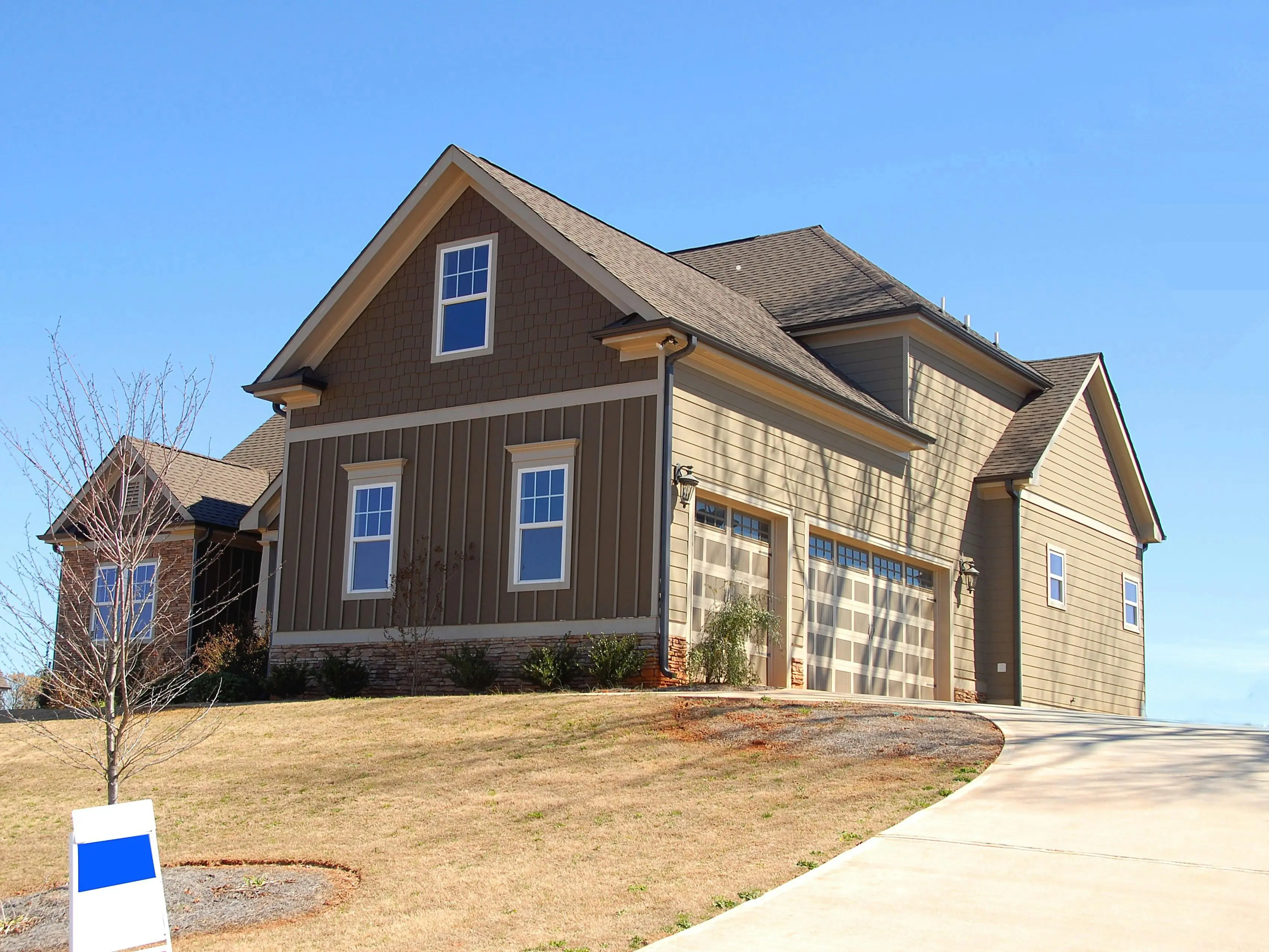
What Exactly Is a Three-Car Driveway?
A three-car driveway is any paved area designed so three average-size vehicles can park side-by-side or in tandem without blocking the sidewalk, garage, or each other. Most municipalities count “one car” as a 9 × 18 ft rectangle, so a true side-by-side three-car driveway needs at least 27 ft of horizontal clearance.
Why does the label matter? Because zoning setbacks, impervious-surface ratios, and contractor pricing are all based on total square footage. If you ask for “a three-stall driveway,” most crews will assume 900–1,050 sq ft of pavement. Knowing the real numbers keeps permits, estimates, and final results aligned.
Standard Dimensions for a Three-Car Driveway
Width: Side-by-Side vs. Tandem vs. Offset
- Side-by-Side (most common): 27–30 ft wide. Add 2 ft on each side for edging and error margin → 31–32 ft total.
- Tandem (nose-to-tail): 10–12 ft wide, but 55–60 ft long. Fits three cars on narrow lots; backing out the first car can be tricky.
- Offset (L-shape or flare): 24 ft wide at the apron, expanding to 30 ft near the garage. Good for corner lots or when a sidewalk limits width.
Length: How Long Is Long Enough?
Standard passenger cars are 14–16 ft long; full-size trucks hit 20 ft. Add 2 ft of walk-around space in front:
- City lot (cars only): 18–20 ft from garage door to sidewalk.
- Suburban lot (trucks/SUVs): 22–25 ft.
- Rural turnaround: 30 ft so the third vehicle can pull forward and angle out.
Total Square Footage Cheat-Sheet
| Layout | Width | Length | Approx. Sq Ft |
|---|---|---|---|
| Side-by-Side | 30 ft | 20 ft | 600 sq ft |
| Side-by-Side w/ Turnaround | 32 ft | 30 ft | 960 sq ft |
| Tandem | 12 ft | 55 ft | 660 sq ft |
Price Estimates for a Three-Car Driveway in 2024
Contractors price by the square foot, but final bids bundle excavation, base, reinforcement, and finish. Expect:
Material Price Ranges (Installed)
- Gravel: $1.50–$3.00/sq ft → $900–$1,800 total. Best for rural homes with stable soil.
- Basic Concrete (4-in. slab, broom finish): $6–$9/sq ft → $3,600–$5,400.
- Stamped/Colored Concrete: $10–$15/sq ft → $6,000–$9,000.
- Asphalt: $4–$7/sq ft → $2,400–$4,200. Requires seal-coating every 4–5 yrs.
- Interlocking Pavers: $12–$18/sq ft → $7,200–$10,800. Highest curb appeal, easy single-paver repair.
Hidden Cost Factors
- Tree removal or stump grinding: $150–$400 each.
- Re-grading or soil stabilization: $1–$2/sq ft.
- Permit fees: $50–$250 depending on city.
- Geotextile fabric under gravel: $0.30/sq ft, extends life 5+ years.
Three Real-World Project Scenarios
Scenario A – Budget Concrete in Midwest
30 × 20 ft side-by-side driveway (600 sq ft). No demolition, flat loam soil. Bid: $6.25/sq ft = $3,750.
Scenario B – Heated Asphalt in New England
32 × 30 ft with 220-volt snow-melt coils under asphalt (960 sq ft). Includes electrical rough-in. Bid: $11.50/sq ft = $11,040.
Scenario C – Permeable Pavers in California
600 sq ft, city rebate for storm-water management. Pavers $14, base $2, rebate –$3. Net: $13 × 600 = $7,800 – $1,800 = $6,000.
Design Tips That Save Money & Headaches
1. Match the Driveway to Your Vehicles
Measure the widest mirror-to-mirror dimension of the largest household vehicle, then add 18 in. on each side for comfortable door swing. If you own a lifted F-250, don’t settle for the 27 ft “textbook” width—go 32 ft.
2. Plan for the Garbage Truck
Garbage and recycling trucks exert 8× the wheel load of a half-ton pickup. Spec a 5-in. concrete slab or 3-in. asphalt over 6-in. compacted base on any segment where trucks will turn or stop.
3. Use a Flared Apron
A 12-ft flare at the street makes backing out easier and reduces tire scuffs on the adjacent lawn. Most cities allow up to 24 ft of curb cut without extra permits—take advantage.
4. Future-Proof for EV Chargers
Even if you don’t own electric cars now, lay a 1-in. PVC conduit under the slab for future 240-volt wiring. The $100 conduit saves $1,200 in trenching later.
Permits, Setbacks, and HOA Rules
City Permits
Any work that touches the public right-of-way—sidewalk, apron, or curb—requires a permit in 80 % of U.S. cities. Fees range $50–$250 and take 5–10 business days. Submit a site plan showing dimensions, existing utilities, and drainage flow.
Storm-Water Runoff
Impervious-surface limits (usually 30–40 % of total lot) may force you to install permeable pavers or a rain garden. Check with the county engineer before you sign a contract.
HOA Aesthetics
Homeowner associations often dictate color, texture, and border patterns. Bring a sample board to the design committee meeting; revisions after pouring are expensive.
Maintenance Timelines by Material
- Concrete: Seal after 1 year, then every 5 years. Patch cracks with polyurethane before they widen.
- Asphalt: Seal-coat at 6 months, then every 3–4 years. Fill potholes immediately to stop water intrusion.
- Pavers: Re-sand joints every 2–3 years; apply polymer sand to inhibit weeds.
- Gravel: Rake high spots quarterly, add fresh stone every 2 years, refresh geotextile every 8–10 years.
Return on Investment & Curb Appeal
Remodeling magazine’s 2023 Cost vs. Value report puts a standard concrete driveway replacement at 68 % immediate ROI, but a three-car width can bump resale value even higher in suburbs with multi-driver families. Real-estate agents note that buyers subtract $5,000–$7,000 mentally if they see cracked, single-lane pavement—meaning a new driveway often pays for itself at closing.
FAQ: Three-Car Driveway
Three Honda Civics fit in 24 ft, but you’ll have zero walk-around space and doors may ding. A 28 ft pad gives breathing room and meets most resale expectations; dropping below 27 ft can also violate local codes that assume 9-ft stalls.
Yes, if the sub-base is sound. Contractors can saw-cut the edge, excavate 1–2 ft outward, tie new rebar into the old slab, and pour matching concrete. Cost is 70 % of a new install but avoids demolition mess. Asphalt extensions are even simpler—mill the seam, tack-coat, and pave.
Residential garbage trucks exert about 4,500 lb per wheel. A 5-in. slab with #4 rebar at 18-in. centers or 6-in. fiber-mesh asphalt over 6-in. crushed base handles that load. Specify “3500-psi concrete, 5–6 % air entrainment” in your contract.
Concrete needs 45 °F and rising for 3 days; asphalt prefers 50–85 °F and dry weather. Late spring through early fall is ideal in northern states. Southern regions can pave year-round, but avoid July-August extreme heat that cools too slowly and can cause roller marks.