
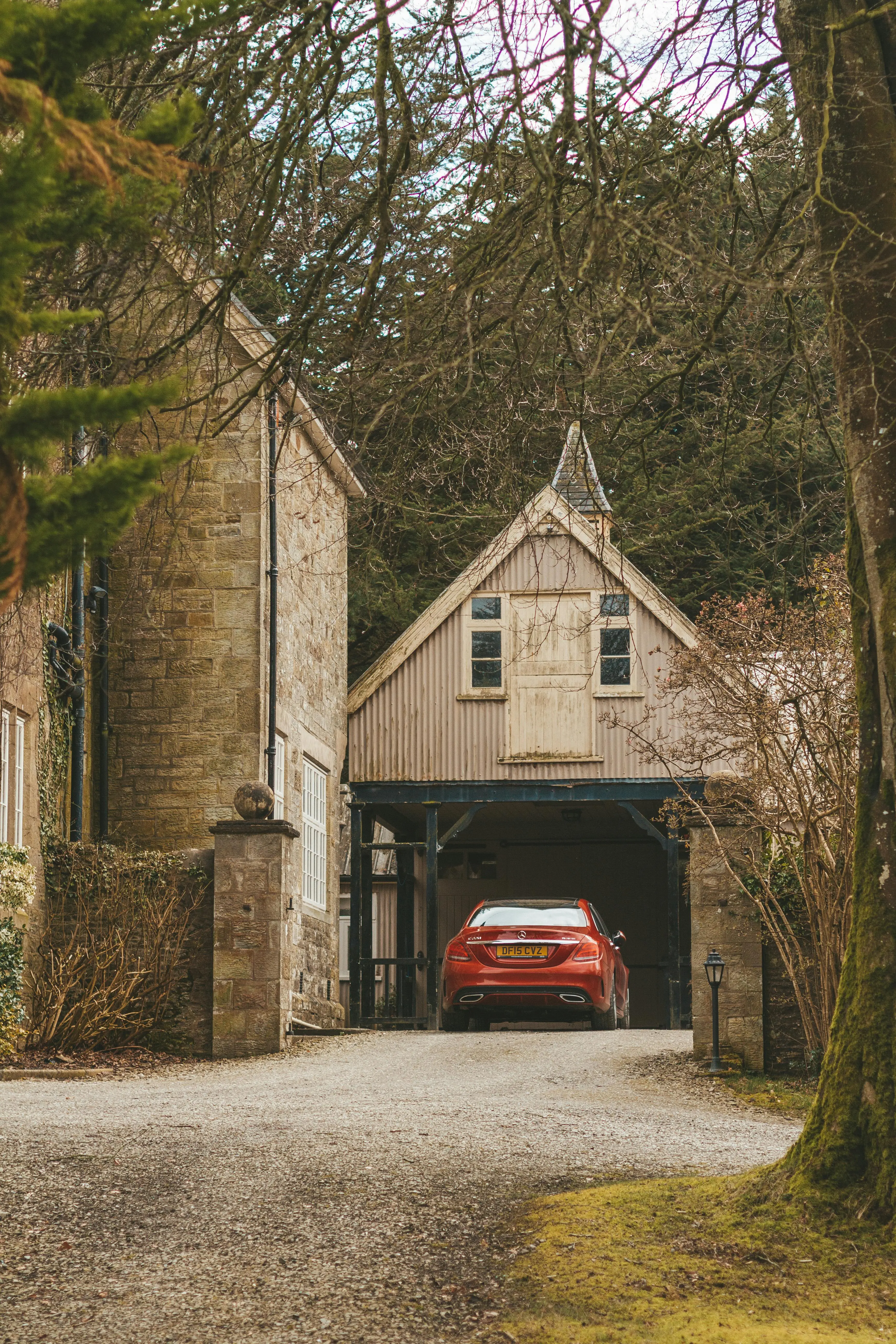
Why Stamped Concrete Driveways Are Having a Moment
Homeowners no longer have to settle for a plain gray slab. Stamped concrete driveways deliver the upscale look of hand-laid stone, brick, or wood planks—without the premium price tag or high maintenance. A single pour, a little color, and a patterned mat transform ordinary concrete into a designer driveway that boosts curb appeal and resale value.
Below you’ll find everything you need to decide if stamping is right for your home: popular patterns, realistic pricing, and pro tips that save money and headaches.
Top 5 Benefits Homeowners Love
- Curb appeal on day one: Mimics expensive materials at a fraction of the cost.
- Custom color palettes: Integral color, release agents, and stains create endless combinations.
- Longevity: Properly sealed stamped concrete lasts 25+ years in freeze-thaw climates.
- Low maintenance: Annual wash and reseal—no weeding between pavers or mortar repairs.
- Fast installation: One crew, two to three days, versus a week for pavers or natural stone.
Popular Stamped Concrete Driveway Patterns
The pattern you choose sets the tone for your entire front yard. Match the architectural style of your house and the hardscape you already have.
Ashlar Slate
Rectangular stones in varied sizes give a formal yet relaxed look. Works with both brick and stucco exteriors. Coloring tip: Use a gray base with charcoal release to highlight deep texture.
Herringbone Brick
Classic V-shape pattern perfect for Colonial, Tudor, or Craftsman homes. Borders in a contrasting soldier course add definition. Choose earthy reds or tumble-tone browns for an aged appearance.
Fractured Earth / Random Stone
Jagged, irregular grout lines mimic natural flagstone. Ideal for ranch, Mediterranean, or modern desert landscapes. Add a light sand-colored release to create sun-bleached highlights.
European Cobblestone
Rounded, tumbled edges recall old-world streets. Great for cottage-style homes or properties with brick walkways. Dark walnut or mahogany tones hide tire marks.
Wood Plank
Ultra-realistic boards with grain knots and saw-cut edges. Pair with farmhouse or contemporary architecture. Use a warm cedar integral color and darker walnut antiquing release for depth.
Seamless Texture Skins
Large mats press a continuous stone texture without grout lines. Fast to install and budget-friendly. Works well on extra-wide driveways where repeat joints would look busy.
Choosing the Right Color Scheme
Three color methods are typically combined for a natural look:
- Integral color: Pigment mixed throughout the concrete—won’t fade if surface chips.
- Color hardener: Broadcast and troweled in for surface strength and richer hues.
- Antiquing release: Powder or liquid that keeps stamps from sticking and leaves dark highlights in grout lines.
Pro tip: Drive a few color chips from your roof or front door to the concrete supplier and ask for a mock-up slab. View it outside at midday and dusk before you commit.
Stamped Concrete Driveway Costs (2024 National Averages)
Basic Stamped Concrete
- One pattern, one integral color
- 4-inch thick, 3,500 psi concrete with rebar
- Price range: $12 – $16 per square foot
Mid-Range Project
- Two patterns (field + border), contrasting colors
- Saw-cut control joints, sealer included
- Price range: $16 – $20 per square foot
High-End Driveway
- Hand-stained highlights, multiple patterns, custom medallion
- 5-inch thick, fiber-mesh reinforced, vapor barrier
- Penetrating sealer + topical high-gloss coat
- Price range: $20 – $28 per square foot
Extra Charges to Budget For
- Removal of old concrete: $3 – $6 sq ft
- Sub-grade correction or geo-fabric: $1 – $2 sq ft
- Radiant snow-melt tubing: $10 – $15 sq ft
- Stain-grade, non-slip additive: $0.50 sq ft
DIY vs. Hiring a Pro—What You Need to Know
Stamped concrete looks forgiving on YouTube, but the clock is your enemy. Once the truck chute opens, you have about 90 minutes before the concrete sets. A three-person crew is standard: one spreads, one places stamps, one colors and touches up. Most suppliers charge a short-load fee under 7 cubic yards, so DIY “savings” evaporate fast.
Bottom line: If your driveway is wider than 10 ft or longer than 40 ft, bring in a certified stamped concrete contractor. Ask to see a portfolio and drive by two installations that are 5+ years old.
Step-by-Step Installation Overview
1. Site Prep & Base
Excavate 8–10 inches, add 4 inches of compacted gravel, install edge forms and rebar grid. Slope ⅛ inch per foot for drainage.
2. Concrete Placement
Order 4,000-psi air-entrained concrete for freeze zones. Add integral color at the plant for consistency.
3. Color Hardener & Release
Broadcast color hardener when bleed water disappears. Apply antiquing release so stamps lift cleanly.
4. Stamping
Start stamping when concrete won’t accept a footprint deeper than ¼ inch. Work uphill, align mats tightly, and use a hand tamper along edges.
5. Control Joints & Washing
Next day, saw cut joints ¼ depth every 10–12 feet. Pressure-wash off excess release, let dry 24 hours.
6. Sealing
Apply two thin coats of high-solids acrylic sealer with a slip-resistant additive. Re-seal every 2–3 years.
Low-Maintenance Care Plan
- Spring: Rinse with a garden hose; spot-treat oil drips with degreaser.
- Summer: Reapply sealer if water no longer beads. Avoid petroleum-based tire dressings—they soften acrylic.
- Fall: Blow off leaves; tannins stain if left wet for weeks.
- Winter: Use plastic shovels and calcium chloride ice melt; never rock salt.
How Stamped Concrete Stacks Up Against Other Materials
vs. Pavers
Pavers win on spot repairs—pull up one brick and reinstall. Stamped concrete wins on first cost and snow-plow friendliness (no edge chips).
vs. Plain Concrete
Plain concrete is $6 – $8 sq ft but adds little aesthetic value. Stamped concrete doubles the visual impact for roughly 60% more money.
vs. Asphalt
Asphalt is cheaper upfront ($4 – $6 sq ft) but needs sealing every 3 years and offers limited color options. Stamped concrete lasts decades longer and stays cooler in summer.
Return on Investment & Appraisal Impact
Remodeling Magazine’s 2023 Cost vs. Value Report estimates a 17% premium for stamped concrete over standard flatwork in the Midwest. Real-estate agents routinely list “decorative concrete driveway” as a feature that speeds sales. Expect 60%–70% of the project cost recouped at resale, higher if the driveway dominates the front elevation.
Permits, Codes & HOA Considerations
Most cities treat stamped concrete like any new driveway: submit a site plan, verify setback, and prove impervious surface ratio. Homeowners associations may restrict gloss level or color; submit a 12-inch sample tile before work starts to avoid costly tear-outs.
Frequently Asked Questions
With proper base prep, control joints, and resealing every 2–3 years, expect 25–30 years in freeze-thaw climates and longer in mild regions.
Surface-sealed color can lose 10%–15% of its richness over the first five years. A fresh coat of high-quality acrylic sealer restores the original hue. Integral color, located throughout the slab, never fades away completely.
A clear grit additive in the final sealer coat increases traction without dulling the finish. Ask for “shark grip” or “anti-skid” at 1 oz per gallon. Textured patterns like slate or cobble also provide more grip than smooth stone.
Sodium chloride (rock salt) eats sealer and causes surface spalling. Switch to calcium chloride or magnesium acetate ice melt, and seal before the first freeze. Shovel promptly to reduce chemical exposure.