
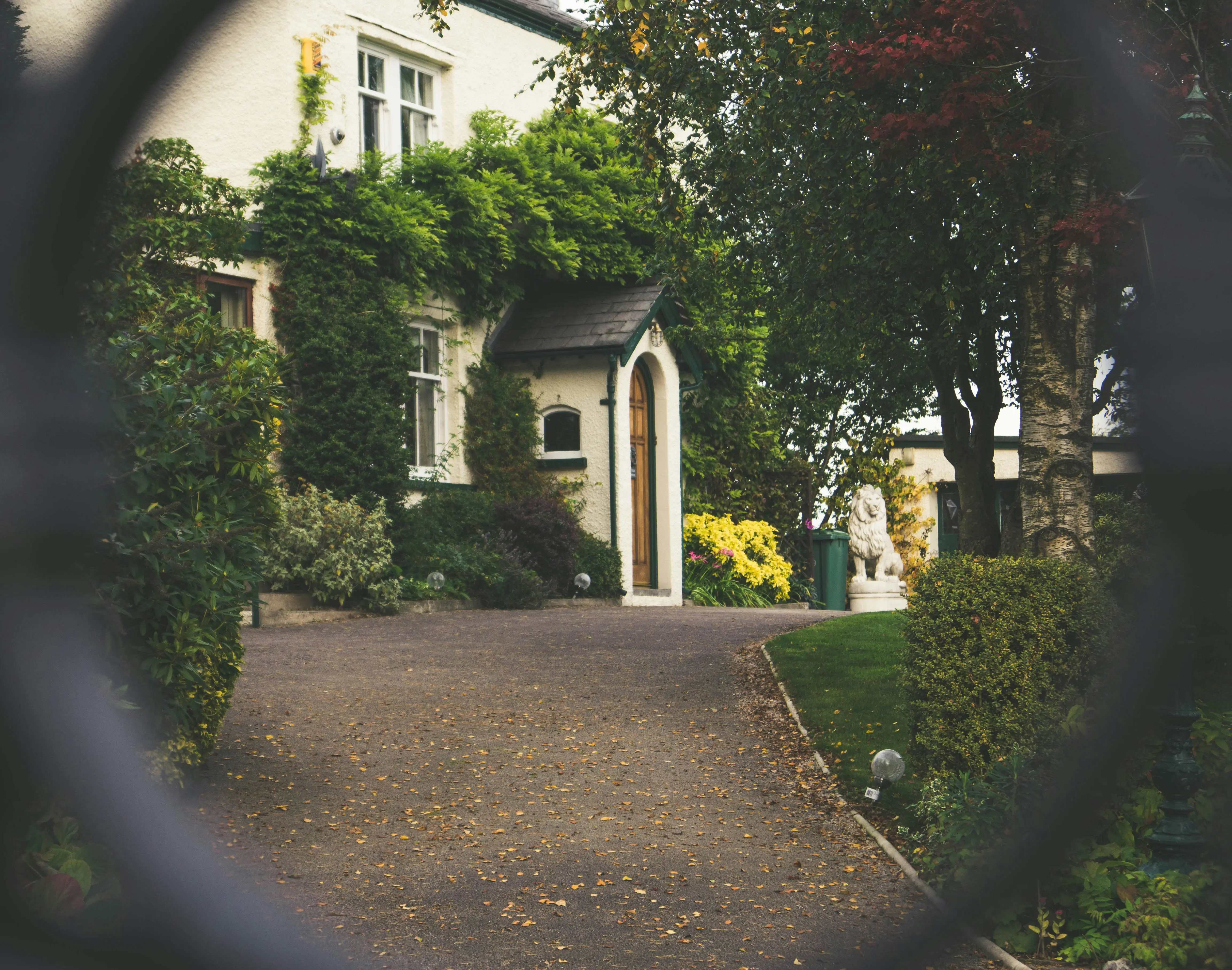
Why Modern Home Driveways Matter More Than Ever
First impressions start at the curb. A sleek, well-planned driveway can boost property value by 5–10 % while slashing daily maintenance. Today’s homeowners want surfaces that drain quickly, resist stains, and complement minimalist architecture. The good news: advances in permeable pavers, LED lighting, and recycled materials make a head-turning upgrade easier—and greener—than ever.
Start With a Plan: 4 Questions to Ask Before You Break Ground
How Many Vehicles Do You Really Need to Park?
Count daily drivers, guest spots, and trailer or boat storage. Add one extra bay for flexibility; the cost of one additional 10 ft x 20 ft section is far less than a future patch job.
What’s the Slope and Soil Type?
Clay soils hold water and may need a geo-textile base. Sandy lots drain fast but can shift. A quick percolation test—dig a 12-inch hole, fill with water, time the drain—tells you if permeable pavers are a smart choice.
Do Local Codes Require Permeable Surfaces?
Many cities now limit impervious coverage. Check HOA rules, too. Some neighborhoods restrict color palettes or glossy sealers that create glare.
How Will Snow Be Removed?
Heated driveway systems and dark-colored surfaces melt snow faster but raise electric bills. If you plow, keep expansion joints flush so blades don’t catch.
Top Material Choices for Modern Home Driveways
Exposed Aggregate Concrete
Polished stones peek through a charcoal matrix, giving subtle sparkle without looking busy. Saw-cut control joints every 12 ft prevent random cracks. Cost: $10–$14/sq ft installed.
Large-Format Porcelain Pavers
2 cm-thick tiles (24"x24" or 36"x36") resist oil, acids, and fading. Lay them over pedestals for a floating look or mortar onto a reinforced slab. Perfect for ultra-modern flat roofs turned car courts. Cost: $18–$25/sq ft.
Resin-Bound Gravel
Recycled glass or natural aggregate mixed with UV-stable resin creates a seamless, porous surface. Choose neutral agate for a luxe feel or crushed shell for coastal vibes. Cost: $12–$16/sq ft.
Geometric Block Pavers
Slim 60 mm-thick rectangular pavers laid in stretcher-bond or herringbone deliver clean lines. Opt for graphite tones with a subtle shot-blast finish for grip. Cost: $14–$20/sq ft.
Reclaimed Brick with Grass Joints
Alternate rows of old Chicago brick with 2-inch strips of dwarf fescue. The living joint softens hardscape and meets permeability rules. Plan on an extra 1 inch of base for root zone. Cost: $11–$15/sq ft.
Integrated Drainage: The Secret to a Long-Lasting Driveway
Permeable Pavers & Ribbon Drives
Open-grade stone base (No. 2 stone topped with No. 57) stores stormwater until it seeps into the sub-soil. Expect to excavate 12–16 inches. Add a 4-inch perforated pipe at the low end if soil percs slower than 0.5 in/hr.
Channel Drains at the Garage Threshold
A 5-inch-wide polymer concrete trench drain catches runoff before it hits your floor. Choose a stainless heel-proof grate for a modern look. Tie the drain to a dry well or storm sewer.
Smart Slot Drains
A 0.5-inch reveal disappears against porcelain or poured concrete. Install in a swept curve to echo landscape arcs. Clean by lifting the recessed grate twice a year.
Lighting & Tech Upgrades That Wow
Low-Voltage LED Strip Lights
Embed IP67-rated strips in aluminum channels along wheel strips. Connect to a dusk-to-dawn sensor. Use 3000 K warm white for hospitality vibes or 4000 K for crisp modernity.
Solar Paver Lights
Replace select pavers with 4"x8" solar units rated for 22 tons. Great for marker patterns every 6 ft. No wiring needed—just swap the battery pack every 3 years.
Heated Driveway Mats
Retrofit electric mesh under new porcelain or stamped concrete. 50 W/sq ft melts 2 in/hr at 20 °F. Operate via Wi-Fi thermostat; expect roughly $0.35 per 100 sq ft per hour.
EV Charging Pad Integration
Plan a 1-inch-thick conduit sleeve before paving. Future-proof for wireless charging pads that sit flush with the surface. Mark the spot with a contrasting paver inlay.
Edging, Borders & Transition Tricks
Floating Steel Blade Edge
A ¼-inch-thick corten strip set ½ inch above the surface keeps gravel contained and adds an architectural line. Seal the back with cold-galvanizing spray to slow rust runoff.
LED-Lit Acrylic Strips
Rout a 1-inch groove along saw-cut concrete and insert frosted acrylic. Light escapes only sideways—no glare for drivers.
Transition to Permeable Walkway
Use the same paver in a lighter shade for foot traffic. Drop the joint width from 3 mm to 1 mm for a subtle shift that guides guests to the front door.
Eco-Friendly Hacks That Cut Carbon & Cost
- Recycle old concrete: Crush existing slabs on-site for base material; saves $2–$3/sq ft in haul-off fees.
- Use fly-ash mix: Replace 25 % of cement with fly-ash to reduce CO₂ by 180 kg per cubic yard without strength loss.
- Choose local stone: Quarry within 200 mi to shrink transport emissions by up to 30 %.
- Plant a rain garden alongside the drive to filter oils before they reach storm sewers. A 4 ft x 8 ft depression handles runoff from 500 sq ft of paving.
Realistic Budget Guide (2024 U.S. Averages)
| Material | $/Sq Ft Installed | 30-Year Cost* |
|---|---|---|
| Standard Concrete | $8 | $12 |
| Exposed Aggregate | $12 | $15 |
| Porcelain Pavers | $22 | $25 |
| Resin-Bound Gravel | $14 | $18 |
*Includes one resurfacing and annual maintenance. Heated systems add $10–$15/sq ft.
Low-Maintenance Care Calendar
Spring
- Pressure-wash at 1500 psi with a surface cleaner—avoids streaks.
- Refill paver joints where poly-sand washed out.
Summer
- Apply UV-stable sealer every 3 years on resin drives.
- Trim grass joints to 2 inches to prevent seed heads.
Fall
- Blow leaves daily—tannins stain porcelain if left for weeks.
- Check channel drain grates after heavy leaf drop.
Winter
- Use calcium magnesium acetate instead of rock salt; it’s safe for porcelain and stainless edges.
- Mark plow stakes 6 inches inside the edge to avoid chipping.
Modern Home Driveways FAQ
Porcelain and exposed aggregate concrete can exceed 30 years with proper base prep and sealing. Resin-bound gravel typically lasts 15–20 years before the first refresh. All life cycles assume climate-appropriate installation and annual maintenance.
Yes, if the slab is level, crack-free, and slopes ⅛ in/ft for drainage. Lay a 1-inch mortar setting bed reinforced with fiberglass mesh. Saw-cut control joints must align with paver joints to prevent reflective cracking.
Grind and stain existing concrete in a two-tone geometric pattern for $3–$4/sq ft. Add solar paver lights along the centerline and a corten steel edge for a modern look under $1,500 total.