
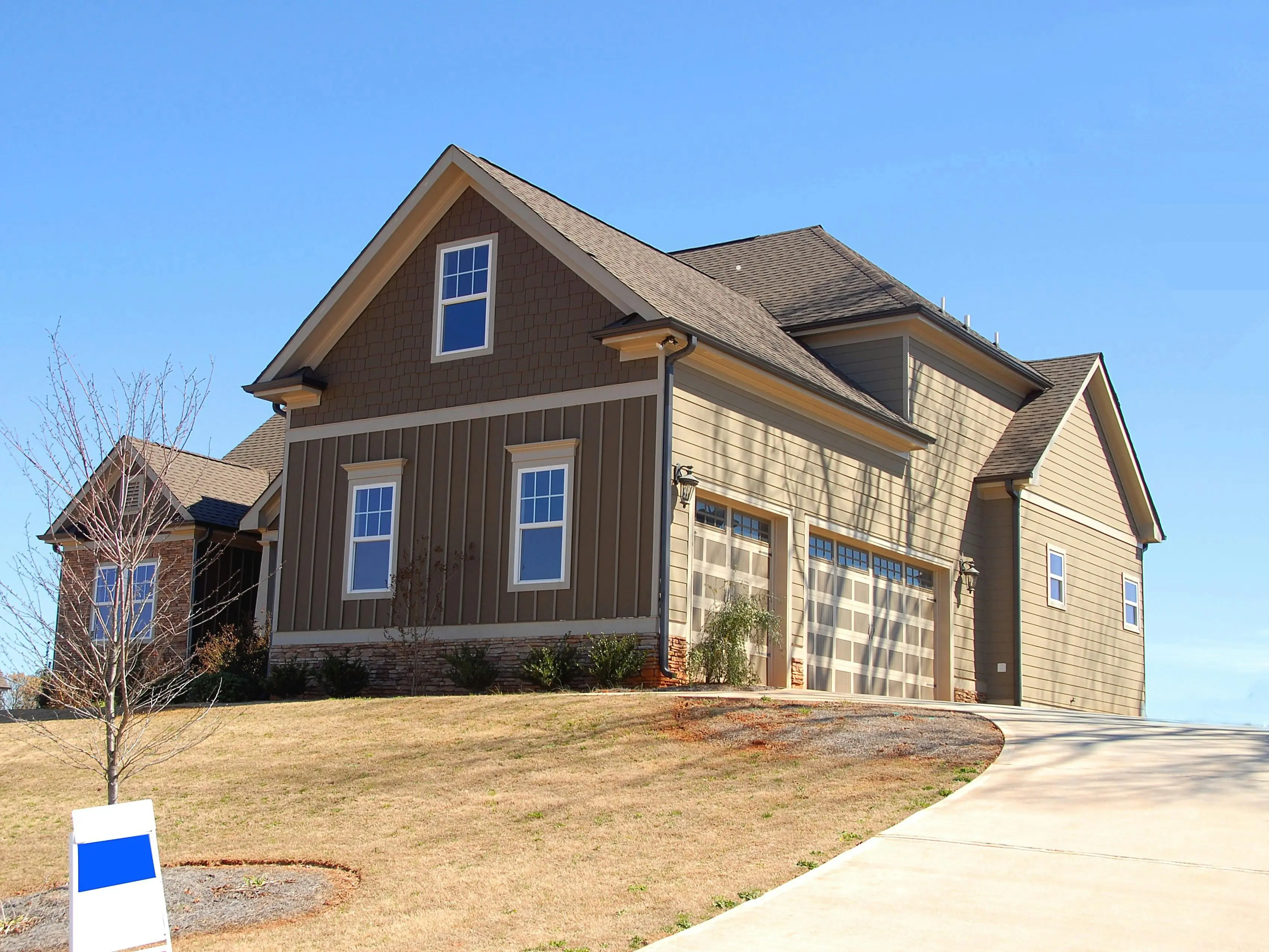
Why a Driveway That Slopes Toward the House Is a Problem
Every time it rains, water rushes down your driveway and pools against the garage, front steps, or foundation. Over months and years that constant moisture can:
- Seep into basement walls and cause mold
- Erode soil under the slab, leading to cracks and settlement
- Flood the garage and ruin stored items
- Create icy patches in winter that are a lawsuit waiting to happen
Fortunately, you don’t have to live with the slope. Below are the proven ways Drivewayz USA crews use to fix a driveway that slopes toward your house, plus ballpark costs, pros & cons, and DIY pointers.
Step 1: Diagnose the Exact Problem
Check the Existing Grade
Grab a 4-ft level and a straight 2×4. Lay the board on the driveway, place the level on top, and measure the gap at the downhill end. A 2 % slope (¼ in. per foot) away from the house is the building-code minimum. Anything that pitches back even 1 % can overwhelm your drain system in a heavy storm.
Look for Low Spots
Pour a bucket of water on the slab and watch where it goes. Puddles that sit longer than 48 h indicate micro-depressions that will only get worse.
Inspect the Foundation
Walk the perimeter: efflorescence (white powder), damp insulation, or rust on sill plates all spell chronic water entry.
Quick Wins: Cheap, Fast Water Deflection
These band-aids won’t reverse the slope but can buy you a year or two while you budget for a permanent fix.
Install a Rubber Threshold Ramp
A 2–4 in. tall neoprene guard glues to the garage floor and acts like a mini-dam. Cost: $80–$120. Downside: you must drive over a bump every day.
Add Downspout Extenders
Roof water often compounds driveway runoff. Extenders that dump water 6 ft away reduce volume by up to 30 %.
Seal Cracks & Joints
A $12 tube of polyurethane sealant stops water from disappearing under the slab and undermining soil.
Permanent Solutions to Reverse the Slope
Option 1: Mudjacking or Polyurethane Foam Leveling
Best for: Concrete driveways with isolated dips or tilted slabs that still have life left.
How it works: Technicians drill ⅝-in. holes and inject a slurry of lime-based grout (mudjacking) or expanding foam (polyjacking). The material lifts the slab until the pitch is 2 % away from the house.
Typical cost: $4–$8 per sq ft (mudjacking) or $6–$12 (poly). A 20×20 ft section runs $1,600–$4,800.
Pros: 1-day job, no demolition, you can drive on poly the same afternoon.
Cons: Cannot correct large elevation changes; new cracks may appear if soil keeps settling.
Option 2: Remove & Repour the Lower Section
Best for: Slabs younger than 15 years with rebar in good shape but wrong pitch.
Process: Saw-cut 3–4 ft out from the house, break out the bad section, re-compact the sub-base, add 4 in. of crushed stone, and repour with proper 2 % slope.
Cost: $10–$15 per sq ft. A 20×4 ft strip = $800–$1,200.
Pros: Seamless look, lasts 25+ years, lets you raise the height to match the garage floor.
Cons: Cold-joint seam may show; if the remaining driveway settles later you’re back to square one.
Option 3: Full Driveway Replacement
Best for: Alligator cracks, multiple patches, or asphalt driveways that also slope the wrong way.
Steps: Remove old material, re-grade sub-soil 4 in. below finished height, install geotextile fabric, add 6 in. of CA-6 limestone, pour 5 in. of 4,000 psi concrete with #4 rebar at 18 in. o.c.
Cost: $8–$18 per sq ft for concrete, $4–$8 for asphalt. A 24×40 ft concrete driveway averages $9,000.
Pros: Corrects any slope, adds curb appeal, 30-year lifespan.
Cons: Highest upfront cost; you’ll park on the street for 5–7 days while concrete cures.
Option 4: Install a Trench (Channel) Drain
Best for: Restrictions from HOA or city code that won’t let you raise the driveway height.
How it works: A 6-in.-wide galvanized or polymer trench is cut across the driveway 1–3 ft from the garage. Water drops into the grate, flows to a catch basin or daylight exit, and never touches the house.
Cost: $35–$60 per linear ft for polymer, $60–$90 for stainless. A 20-ft wide driveway = $700–$1,800.
Pros: No need to change existing slab grade, handles heavy rain, easy to retrofit.
Cons: Must clean leaves quarterly; in snow regions plows can snag the grate.
Option 5: Swale or French Drain in the Yard
Best for: Properties with enough fall toward the street or side lot.
Install a shallow grass swale (8–12 in. deep) or a buried perforated pipe wrapped in fabric and stone. Captures water before it hits the driveway and pipes it away.
Cost: $25–$40 per linear ft for French drain; $3–$5 per sq ft for swale grading & seed.
Pros: Invisible once grass grows, handles roof runoff too.
Cons: Needs 2–3 ft of yard width; may require city easement approval.
How Homeowners Decide: A 3-Minute Checklist
- Measure slope: if ≥ 1 % toward house → move to step 2.
- Slab age & condition: <10 years and no spider cracks → try mudjacking or sectional repour.
- HOA rules: if height restrictions → choose trench drain.
- Budget ceiling: under $2 k → trench or sectional; over $8 k → full replacement.
- Future plans: selling within 5 years → mid-range fix that photographs well; “forever home” → invest in full replacement with decorative stamped border.
DIY vs. Pro: What You Can Realistically Handle
DIY-Friendly
- Seal cracks & joints
- Install rubber threshold
- Add gutter extenders
- Dig a small swale (call 811 first)
Hire a Pro
- Mudjacking or foam injection (requires $30 k pump rig)
- Concrete pours over 1/3 cu yd (order-ready mix truck)
- Channel drains across public sidewalk (city permit)
- Any work within 5 ft of foundation footer (structural risk)
Permits & Code Points
Most municipalities treat driveway reconstruction as “flat-work” and require:
- Plot plan showing new slope percentages
- Right-of-way permit if you cut the city apron (the section that crosses the sidewalk)
- Storm-water affidavit stating you’re not increasing runoff velocity onto neighbors
Expect 5–10 business days for approval and a $75–$200 fee. Drivewayz USA pulls all permits for clients; DIYers can apply online through the city portal.
2024 Cost Summary (National Averages)
| Solution | $/sq ft | 20×20 ft Example | Lifespan |
|---|---|---|---|
| Rubber threshold + sealant | $0.50 | $200 | 2–3 yrs |
| Mudjacking | $4–$8 | $1,600–$3,200 | 5–10 yrs |
| Sectional repour | $10–$15 | $2,400–$3,600 | 20–25 yrs |
| Full concrete replacement | $8–$18 | $6,400–$14,400 | 30 yrs |
| Trench drain | $35–$60 lin ft | $700–$1,200 (20 ft) | 15 yrs (poly), 30 yrs (steel) |
Maintenance Tips to Keep Water Flowing Away
- Every spring, shoot a laser line across the driveway; if pitch drops below 1 %, schedule a foam touch-up before cracks appear.
- Clean trench drains with a shop-vac and flush with hose; install inexpensive leaf guards.
- Re-seal expansion joints every 3–5 years with self-leveling silicone.
- Keep gutter downspouts clear; a single clogged leader can dump 500 gal of water at the garage in a 1-in. storm.
Frequently Asked Questions
Only if you add more than 4 in. of new concrete. Standard garage slabs are 4 in. below the wood sill plate, so lifting 2–3 in. is safe. Anything higher requires trimming the door bottom or resetting the track. Drivewayz USA measures before pouring to keep your door functional.
Yes, but the channel must sit on a poured concrete beam for support. We cut a 12-in.-wide strip, pour a 6-in. thick concrete pad, embed the trench, then patch asphalt flush to the frame. Expect the project to take one extra day.
Mudjacking slurry reaches 75 % strength in 24 h; poly foam is 90 % in 30 min. We recommend waiting 4–6 h for foam and 24 h for slurry before normal vehicle traffic.
Realtors estimate a dry, crack-free driveway returns 70–100 % of its cost at resale. More importantly, eliminating water intrusion protects your foundation—an issue that can kill a deal or trigger costly concessions during inspection.