
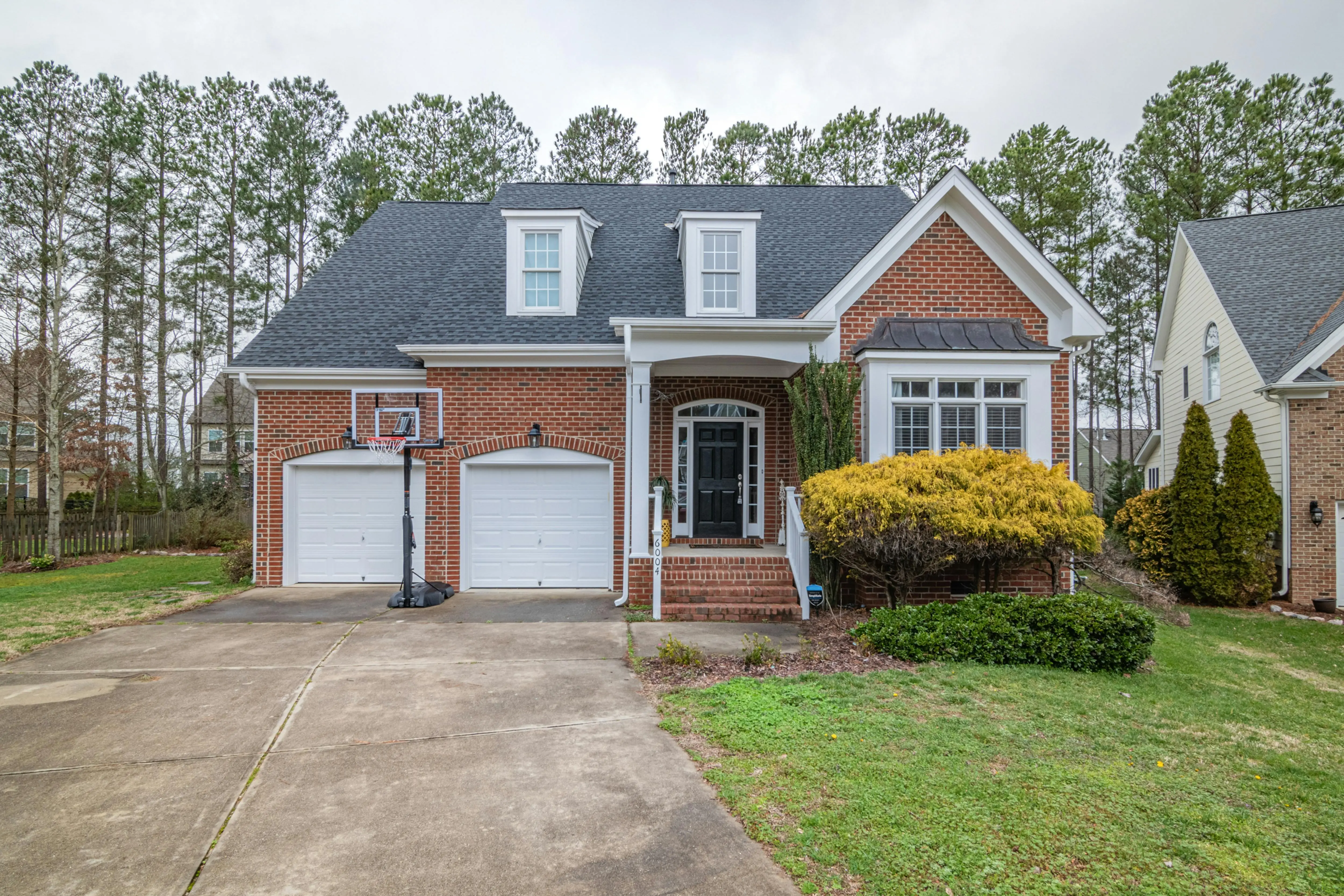
Why the Driveway to Walkway Connection Matters
First impressions start at the curb. A smooth, intentional Driveway to Walkway Connection guides guests safely to your door while quietly boosting resale value. When materials, colors, and elevations flow together, the whole property looks “finished,” even if you never touch the landscaping.
On the flip side, an abrupt edge, mismatched paver, or sunken step screams “patch job.” Water pools, weeds sprout, and someone eventually trips. The fix is rarely expensive—just thoughtful. Below you’ll learn how to spot red flags, choose compatible materials, and keep the visual line crisp for decades.
Step 1: Map the Natural Footpath
Before you price pavers or pour new concrete, spend five minutes watching how people actually walk. Delivery drivers, the mail carrier, and your teenager with headphones all follow the same arc. That arc is where your walkway should live.
Tools You Already Own
- A garden hose or 100-ft extension cord—lay it out to mock the curve.
- Smartphone video—record a busy Saturday and replay in slow motion to see foot traffic.
- Flour or spray chalk—mark the line, then live with it for a week. If nobody kicks the flour away, you nailed it.
Check Local Codes Early
Most towns require a 4-ft wide walk (5 ft for ADA compliance) and a 1 % slope away from the house. If you share a sidewalk apron, the city may own the first 8–12 ft. Call 811 to flag utilities and avoid a $2,000 relocation fee later.
Step 2: Choose Materials That Talk to Each Other
The magic word is repeat. Repeat a color, a texture, or a shape so the eye reads driveway and walkway as one system—not two projects that met by accident.
Concrete Driveway → Concrete Walk
Match aggregate size and finish. If the drive is broom-finished, broom the walk in the same direction. Score a 2-ft decorative band along the drive edge and duplicate that band width in the walk. Use the same color release agent or a 10 % darker integral dye for subtle contrast.
Asphalt Driveway → Paver Walk
Asphalt is flat and black; pavers add texture. Pick a paver with at least 15 % charcoal in the blend so the palette ties back to the asphalt. Lay a 6-in soldier course (pavers turned on edge) along the asphalt perimeter, then carry that same course into the walkway border. The repeating line pulls the two surfaces together.
Brick or Paver Drive → Brick Walk
Resist the urge to match exactly. Instead, choose the same brick in a different pattern—running bond for the drive, herringbone for the walk. The material repeats, the pattern signals “transition,” and you avoid a monotonous sea of red.
Step 3: Smooth the Grade & Eliminate Trip Points
A ½-in lip at the driveway edge is all it takes to snag a heel. The goal is ±¼ in height difference or less. Here’s how to hit that number.
Measure Twice, Cut Once
- Stake a line level across the joint every 18 in.
- Record the highest and lowest spot; anything over ¼ in gets ground down or shimmed up.
- For concrete, rent a 7-in hand grinder with a diamond wheel ($45 half-day) and feather the edge.
- For pavers, pop the offending units, add or remove bedding sand, and tamp until the plate compactor “rocks” no more.
Add a Gentle Transition Slope
Where the walk meets a sloped drive, allow a 1:8 taper (1 in of rise for every 8 in of run). That keeps lawn mowers and strollers from bottoming out while still shedding water.
Step 4: Keep Water from Crossing the Seam
Water follows the crack. If the driveway is higher than the walk, install an ADA-compliant trench drain or a 4-in wide French drain between the two surfaces. Cover the trench with the same paver or a metal grate painted to match the house trim.
Quick Drainage Checklist
- Slope walk 1 % (1/8 in per ft) away from the house.
- Install an expansion joint every 8 ft; seal it with gray self-leveling urethane so it blends instead of screams.
- Add a 6-in strip of river rock between asphalt and concrete—catches runoff and becomes a design stripe.
Step 5: Handle the Expansion Joint Like a Pro
The driveway and walkway will move at different rates. A closed-cell foam backer rod and a 100 % silicone sealant let them slide without cracking the adjacent surface. Choose a sealant labeled “concrete gray” or “limestone” to disappear in the joint.
Color-Match Cheat Sheet
| Surface Color | Sealant Shade |
|---|---|
| Plain gray concrete | “Standard Gray” or “Limestone” |
| Exposed aggregate | “Stone” or clear with gray foam backer |
| Red brick pavers | “Tan” or “Clay” |
Step 6: Frame the Transition with Softscape
Plants are the cheapest way to hide a small height gap or color mismatch. Use low, repeating clumps so the eye keeps moving.
Best 12-Inch Buffer Plants (Sun)
- Blue fescue grass—evergreen, 10 in tall, matches gray concrete.
- Dwarf daylily—strappy foliage ties into brick reds.
- Creeping thyme—fills ½-in gaps between pavers, smells great when stepped on.
Best Shade Options
- Liriope spicata—tolerates salt from driveway ice melt.
- Ajuga “Chocolate Chip”—dark leaves echo asphalt tones.
Step 7: Light the Seam for Safety & Drama
Down-lighting works better than post lamps because it casts shadows on texture differences, warning feet before brains notice. Install 3-in LED wells every 6–8 ft along the joint. Use 2700 K “warm white” bulbs so concrete doesn’t look purple at night.
Solar vs. Low-Voltage
Solar fixtures have come a long way, but they still fade under maple shade. If you get 4 hours of direct sun, solar is fine. Otherwise, a $199 12-volt kit with a timer pays for itself in one avoided ER visit.
Long-Term Care: 15-Minute Seasonal Tasks
A connected surface only stays pretty if the joint stays sealed and the slope stays clear.
- Spring: Pressure-wash on low setting; reapply polymeric sand to paver joints if washed out.
- Summer: Trim plants so foliage doesn’t hang over the walk; moisture trapped against concrete invites mildew.
- Fall: Blow leaves off the expansion joint; trapped water freezes and pries the seam.
- Winter: Use calcium magnesium acetate (CMA) ice melt—won’t eat concrete or asphalt edges.
Ballpark Costs for a 4-Ft Wide, 20-Ft Long Connection
Prices include demo of old sidewalk section, disposal, base gravel, and labor. Add 10 % for curves or intricate patterns.
- Plain gray concrete: $900–$1,200
- Stamped & colored concrete: $1,600–$2,100
- Concrete pavers: $1,900–$2,500
- Wet-laid natural stone: $2,800–$3,500
Pro tip: Ask your contractor for a “driveway package” discount—bundling the walk with a seal-coat or paver cleaning drops the per-square-foot price by 8–12 %.
FAQs About Driveway to Walkway Connections
Yes, but you must install a ½-in expansion joint filled with backer rod and flexible sealant. Without it, thermal movement will crack the fresh concrete within a year. Also grind a ¼-in bevel on the asphalt edge so the joint stays flush after cars compress the blacktop.
First, use polymeric sand in every paver joint; it hardens and blocks seeds. Second, install a 4-in wide concrete curb or aluminum edging along the seam; it stops lateral movement that opens gaps. Finish with a pre-emergent herbicide every spring—look for one safe for hardscapes.
Absolutely. The key is an isolation joint that lets the heated section expand slightly. Run the heating cables 6 in away from the joint and seal the gap with gray silicone rated to –40 °F. Snow melt will stop at the joint instead of refreezing on the driveway.
For a temporary fix, install a beveled rubber threshold ($30 at big-box stores) and glue it down with exterior construction adhesive. For a permanent fix, rent a concrete grinder and feather the edge down to ¼ in, then seal the joint. The rental plus diamond wheel runs about $60 for a half-day.