
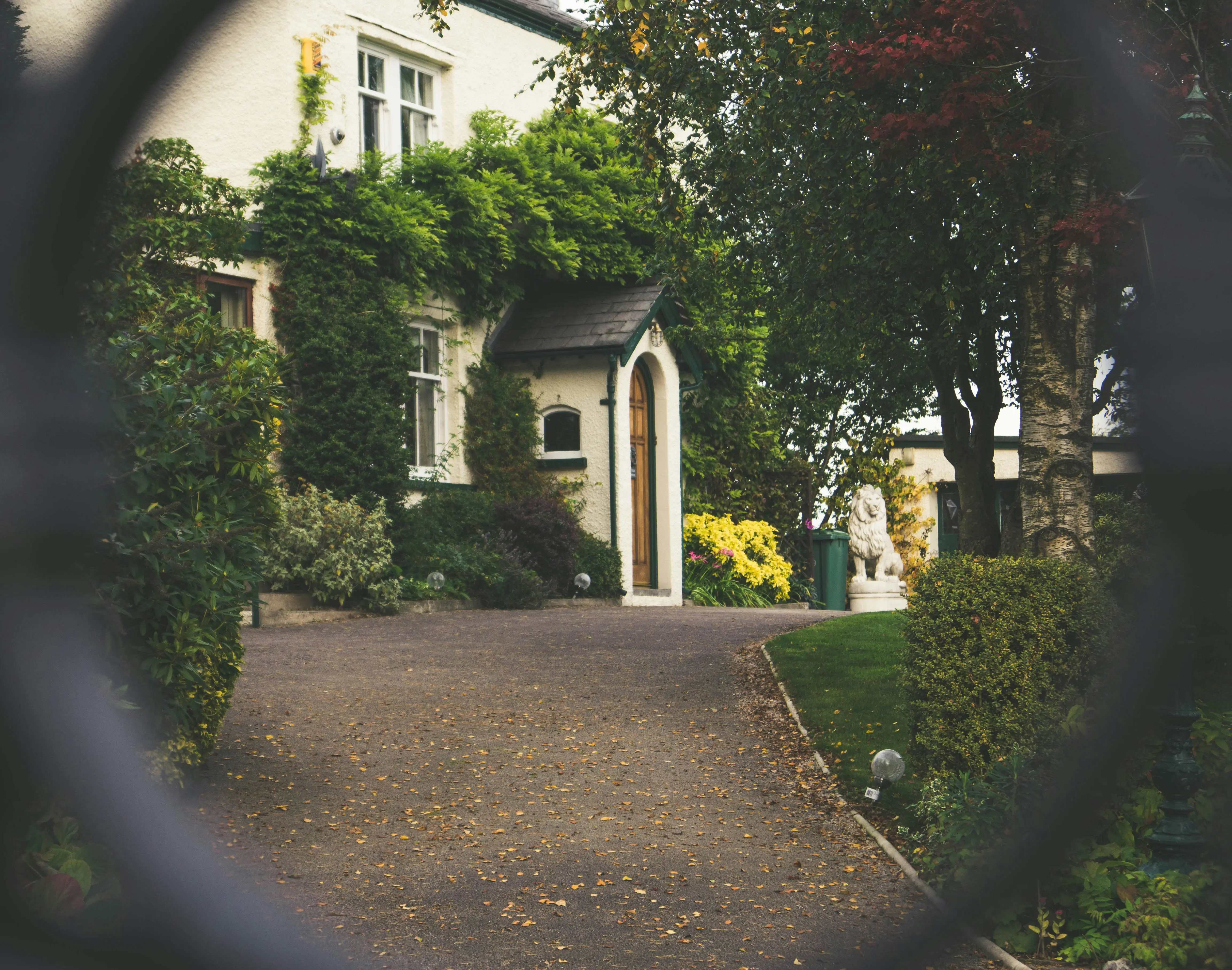
What a Driveway Stamped Overlay Is—and Why It’s Trending
A driveway stamped overlay is a thin, cementitious topping (⅛-¼ in. thick) that’s applied over sound concrete and then imprinted with rubber or polyurethane mats to mimic stone, brick, slate, wood, or custom designs. Homeowners love it because they get a brand-new decorative surface without the mess, cost, or landfill trip of full removal.
Google searches for “stamped overlay” have doubled since 2020 as people look for faster, greener ways to boost curb appeal. If your existing slab is relatively flat and free of major structural cracks, you can literally “stamp” personality onto it in 2–3 days.
Top 7 Benefits Homeowners Notice First
1. Instant Curb Appeal for Less Money
Stamped overlays run $8–$14 per sq ft installed, while tear-out and new stamped concrete averages $14–$20. A 600 sq ft driveway saves $3,600–$4,800 and still turns neighbors’ heads.
2. Unlimited Design Choices
Modern stamp mats come in 100+ patterns and can be combined with sawcuts or custom dyes to create borders, medallions, or even family initials.
3. Minimal Downtime
Most driveways are back in service 24–48 hours after sealing, compared with 5–7 days for new concrete curing.
4. Eco-Friendly Upgrade
Keeps tons of concrete out of landfills and reduces heavy equipment emissions on your property.
5. Slip-Resistant Surface
Texture from the stamps adds grip; a clear grit additive in the sealer boosts wet traction without changing the look.
6. UV & Salt Stability
Polymer-modified overlays resist Michigan road salt and Arizona sun alike, so colors stay true longer than traditional exterior stains.
7. Future Repairability
If you drop a trailer jack and chip the edge, a pro can re-stamp and blend a small section instead of replacing the whole slab.
Is Your Driveway a Good Candidate?
Stamped overlays need structurally sound concrete to bond. Run this 60-second checklist:
- Cracks: Hairline cracks < ¼ in. are fine; wider cracks must be routed, filled, and stitched.
- Spalling: If the top ½ in. is flaking off, a thicker “micro-topping” or skim coat is required first.
- Drainage: Water should sheet toward the street, not pool. Low spots can be leveled with the overlay mix, but large puddles need correction first.
- Height clearances: Overlay adds ¼ in. Will garage doors still close? Will it block a sidewalk expansion joint?
When in doubt, schedule a core drill test. A pro removes a 2-in. plug to measure compressive strength (needs 3,000 psi minimum) and check for hidden freeze-thaw damage.
Choosing the Right Pattern, Color & Border
Match Your Home’s Architecture
- Colonial brick: Running-bond brick stamp with warm russet release agent.
- Modern farmhouse: 6×6 ashlar slate in gray tones, saw-cut joints every 4 ft.
- Southwestern: Random stone with terra-cotta integral color and dark walnut highlight.
Use Color in Layers
Experienced crews apply at least two colors: an integral base color mixed into the overlay and a release powder or liquid that accents highs and lows. Ask for a jobsite sample board so you can see it wet and dry.
Border Tricks That Pop
A 12-18 in. contrasting border frames the driveway and hides saw-cut control joints. Popular combos: light gray field with charcoal border, or sandstone field with mahogany brick border.
Step-by-Step Installation Guide
Understanding the sequence helps you hire smart and spot shortcuts.
Day 0 – Pressure Wash & Patch
3,500 psi washer removes oil, fertilizer stains, and loose grit. Cracks are filled with semi-rigid polyurea that flexes but won’t shrink.
Day 1 – Prime & Base Coat
A polymer bonding primer is rolled on like paint; it dries tacky in 30 minutes. Crews then screed the overlay mix (cement + sand + polymer) to a uniform ⅜ in. thickness.
Day 1 – Stamp & Detail
Color hardener or release is broadcast, and mats are laid in the predetermined sequence. Timing is critical: stamp too early and you sink; too late and the mat won’t imprint. Detailing with texture skins and chisels happens next.
Day 2 – Saw Cuts & Clean
Control joints are cut ⅛ in. deep every 10-12 ft to guide future cracks. Surface is neutralized and rinsed to remove residual release powder.
Day 2 – Seal & Cure
Two coats of high-solids acrylic or polyurethane sealer are applied by roller and back-brushed. Non-slip additive is stirred into the second coat. Keep cars off 24–48 hrs; foot traffic OK in 4 hrs.
Typical Cost Breakdown for 2024
| Item | Price Range (USD per sq ft) |
|---|---|
| Surface prep & crack repair | $1.00 – $2.00 |
| Stamped overlay install | $5.50 – $8.00 |
| Color & release | $0.75 – $1.25 |
| Sealer & non-slip grit | $0.75 – $1.00 |
| Total turnkey | $8.00 – $12.25 |
Add-ons: saw-cut custom medallion (+$300–$600), heated overlay for snow melt (+$10–$14 per sq ft), or night-time glow-in-the-dark aggregates (+$2 per sq ft).
Low-Maintenance Schedule That Adds Years
Weekly
- Blow or rinse off leaves; tannic acid can stain light colors.
Quarterly
- pH-neutral cleaner and soft-bristle broom; avoid dish soap—it dulls sealer.
Annually
- Visual inspection for sealer wear (water should bead). If not, apply one maintenance coat of the same sealer. Cost: $0.50 per sq ft DIY or $1.25 hired.
Every 3–5 Years
- Professional reseal with pressure wash and light buff. Expect $1.50–$2.00 per sq ft.
Pro tip: Keep a leftover quart of overlay color in your garage for easy touch-ups if a snow shovel ever chips an edge.
Stamped Overlay vs. Alternatives
vs. New Stamped Concrete
Overlay wins on price, mess, and speed; new concrete wins if your slab is heaving or you need 30+ years of structural life.
vs. Pavers
Pavers offer instant replaceability and higher resale in some markets, but they cost 30–50 % more and can shift under heavy SUV traffic.
vs. Gravel or Chip Seal
Gravel is cheaper upfront but needs raking, weed control, and redressing every 2 years. Stamped overlay is fixed, clean, and HOA-friendly.
DIY or Hire a Pro?
Manufacturers sell overlay kits online, and talented homeowners can tackle 100 sq ft patios. For driveways, though, the stakes are higher:
- 3,500 lb cars exert 180 psi on small tire footprints—bond failure is catastrophic.
- Open time of overlay mix is 15–20 minutes in 80 °F weather; a 2-car driveway needs four stamping mats and a rhythm crew.
DrivewayZ USA recommends hiring a contractor with at least 50 completed overlay projects and a portfolio of 5-year-old photos to prove longevity.
5 Questions to Ask Your Contractor
- Will you provide ASTM C1583 bond test results on my concrete?
- What polymer solids percentage is in your overlay mix? (Look for 15–20 %.)
- Do you use UV-stable acrylic or cheaper “stucco” sealers that yellow?
- How deep will control joints be cut, and will they align with my garage expansion joint?
- Is maintenance sealing included in year one, and what’s the cost after that?
Frequently Asked Questions
With proper maintenance—annual rinse and 3-year reseal—a driveway stamped overlay lasts 15–20 years. Heavy salt regions or commercial traffic may see 12–15 years, still outperforming most exterior stains.
No. The polymer overlay needs a rigid, cement-based substrate to bond. You can, however, install a thin concrete “white cap” over asphalt first, then stamp, but cost approaches new concrete at that point.
Quality integral color + UV-stable sealer resists fading better than traditional concrete dyes. Expect 5–7 % color change over ten years—similar to interior hardwood aging, and uniform enough to stay attractive.
Light passenger vehicles: 48 hours. Heavy trucks or RVs: wait 72 hours. Cool or humid weather extends curing; your contractor should verify sealer hardness with a thumbnail test before giving the green light.