
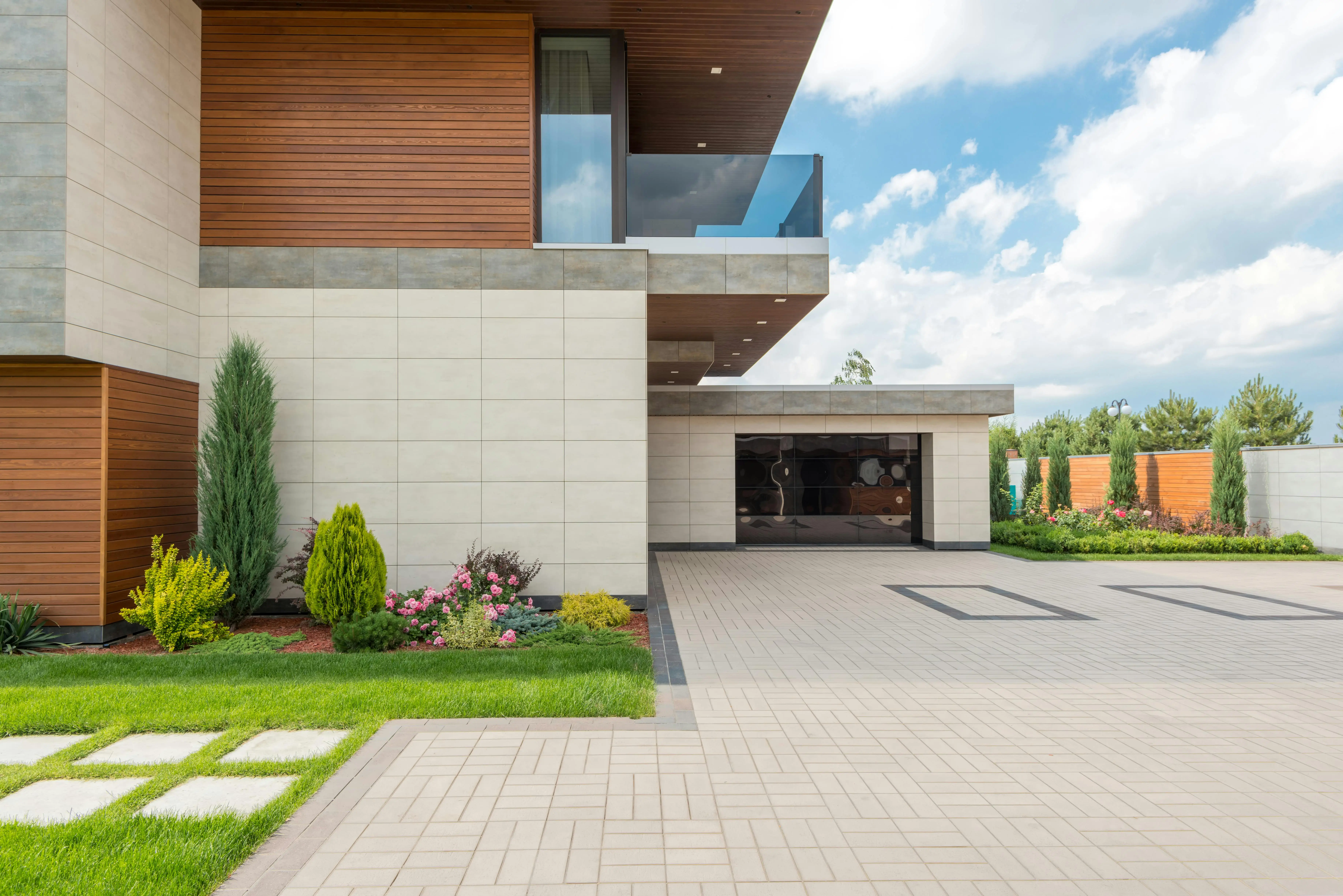
Why a Driveway Maintenance Schedule Matters
A driveway is the welcome mat to your home, yet it’s often ignored until cracks, stains, or potholes appear. Following a year-by-year Driveway Maintenance Schedule prevents small issues from becoming budget-busting repairs and keeps your curb appeal (and property value) high.
The schedule below works for asphalt, concrete, and paver driveways. Adapt the timing to your climate—freeze-thaw zones need earlier fall prep, while sun-belt homes should focus on UV protection.
Year 0: New Driveway Cure & Protection
Whether you just poured concrete or laid hot-mix asphalt, the first 12 months set the foundation for decades of performance.
First 30 Days
- Keep passenger vehicles off for 5–7 days (concrete) or 2–3 days (asphalt).
- No turning wheels while stationary—tears the surface.
- Water-cure concrete daily if temps exceed 85 °F.
Month 2–12
- Apply initial sealant on asphalt at 90 days; concrete can wait until month 12.
- Install drip edges along garage apron to stop water infiltration.
- Post “no heavy trucks” signs—moving vans and contractors are the #1 cause of early ruts.
The Annual Driveway Inspection Checklist
Every spring and fall, spend 30 minutes walking your driveway with a notepad and screwdriver. Catching problems early is the cheapest insurance you’ll ever buy.
Spring Scan (March–April)
- Look for alligator cracks—interlaced fissures that resemble reptile skin.
- Check expansion joints for separation or weed growth.
- Photograph oil spots; if they reappear after cleaning, you may have an engine leak that will keep staining.
- Test surface hardness—drag a key lightly; if it gouges, your sealcoat is wearing thin.
Fall Prep (September–October)
- Clear leaves weekly—organic acids bleach and pit concrete.
- Verify drainage slopes; puddles that survive 24 hrs after rain need re-grading.
- Fill cracks > ¼ in. with flexible, temperature-rated sealant before the first freeze.
- Shut off sprinkler lines that overspray—the freeze-thaw cycle is a crack accelerator.
Asphalt Driveway Maintenance Schedule (Year-by-Year)
Years 1–2: Seal & Shield
- Apply coal-tar or asphalt-emulsion sealer at 12 months, then every 24–30 months thereafter.
- Use a squeegee, not a sprayer, for thicker build on high-traffic areas.
- Spot-fill hairline cracks with rubberized crack filler; don’t wait for the full sealcoat cycle.
Years 3–5: Patch & Protect Edges
- Edge cracks are the fastest path to base failure—install brick or concrete berm to stop sideways erosion.
- Apply a second full sealcoat; add 2 % sand for slip resistance on sloped drives.
- Pressure-wash oil spots with biodegradable degreaser before sealing or they’ll bleed through.
Years 6–10: Overlay or Infrared Patch
- If > 15 % of surface is cracked, opt for a 1.5-in. overlay instead of repeated sealing.
- Infrared patching blends new asphalt with old, eliminating seams that let water in.
- Re-establish crown—center should be ¼ in. higher than edges for every 10 ft width.
10+ Years: Full Replacement Signs
- Base washout—potholes return within months of patching.
- Alligator areas wider than 3 ft signal sub-base failure; sealcoat is cosmetic at this stage.
- Drainage reversal—water ponds near garage instead of running to street.
Concrete Driveway Maintenance Schedule (Year-by-Year)
Years 1–3: Seal & Joint Fill
- Apply penetrating silane/siloxane sealer at month 12; reapply every 3–5 years.
- Replace brittle fiberboard expansion joints with backer-rod and self-leveling polyurethane.
- Use a plastic shovel—metal blades scratch and expose aggregate.
Years 4–7: Crack Injection & Resurface
- Inject cracks < ¼ in. with low-viscosity polyurethane to stop water reaching rebar.
- Apply micro-topping or thin polymer overlay to revive color and hide minor spalling.
- Install control joints every 10 ft if builder skipped them—saw-cut 1 in. deep to guide future cracks.
Years 8–15: Slab Replacement vs. Mud Jacking
- Sunken slabs can be lifted with polyurethane foam for 25 % cost of replacement.
- Replace panels with > ½ in. differential settlement—foam won’t fix deep soil issues.
- Match new concrete strength (4,000 psi) and add fiber mesh to limit future cracking.
Paver Driveway Maintenance Schedule
Interlocking concrete or brick pavers offer easy spot repairs, but joint sand loss and weed growth are the main enemies.
Annual Tasks
- Re-sweep polymeric sand into joints every spring; wash-in with light mist to activate binder.
- Apply breathable paver sealer every 3 years to lock color and stabilize sand.
- Rotate stained or chipped pavers—swap with a less-visible unit from the edge.
5-Year Tune-Up
- Check edge restraints; shifting pavers usually mean the plastic or aluminum edging has lifted.
- Power-wash at 1,200 psi max—higher pressure scours aggregate and loosens bedding layer.
- Add geotextile under any new sections to prevent stone base from mixing with soil.
Seasonal Quick Wins
Winter (December–February)
- Use calcium-magnesium acetate (CMA) ice melt—chlorides corrode concrete and rust rebar.
- Place plywood under car tires if parked for days—prevents flat spots on asphalt.
Summer (June–August)
- Hose down the surface during 90 °F+ days—cooling reduces asphalt softening and tire marking.
- Apply UV-shield sealant on exposed aggregate concrete to stop “salt-and-pepper” loss.
DIY vs. Professional Help
| Task | DIY Feasible? | Pro Advantage |
|---|---|---|
| Crack sealing < ½ in. | Yes—$30 in material | Hot-rubber melters last 3× longer |
| Sealcoating | Yes—$120 DIY kit | Commercial-grade, spray + squeegee, even sand additive |
| Overlay/infrared patch | No | Requires 1-ton roller & 500 °F heater |
| Slab replacement | Partial—break up only | Correct base prep, psi mix, finish & cure warranty |
Rule of thumb: if the fix covers more than 10 % of total driveway area, call a licensed specialist. You’ll save on rework and get a workmanship guarantee.
Typical Costs in the Driveway Maintenance Schedule
- DIY crack filler (100 ft of ¼-in. cracks): $25–$40
- Professional hot-rubber crack sealing: $0.75–$1.25 per linear foot
- DIY sealcoat (600 sq ft): $120–$150
- Professional sealcoat: $0.12–$0.20 per sq ft
- 1.5-in. asphalt overlay: $2.50–$4.00 per sq ft
- Concrete micro-topping: $3.00–$5.00 per sq ft
- Full concrete replacement: $8.00–$12.00 per sq ft
Setting aside $250–$400 per year on average avoids the $6,000–$10,000 surprise of early replacement.
Driveway Maintenance Schedule FAQ
First seal at 90 days, then every 24–30 months in moderate climates. High-traffic or snowy regions may need sealing every 18–24 months. If water stops beading, it’s time.
Traditional rock salt (sodium chloride) damages concrete and corrodes rebar. Switch to calcium-magnesium acetate (CMA) or sand for traction. Always shovel first—less de-icer is needed.
For asphalt, clean debris, insert backer-rod, then fill with rubberized crack filler ($10 tube). For concrete, use a polyurethane self-leveling sealant. Both prevent water from destroying the base and cost under $1 per linear foot DIY.
Yes, but stay below 1,200 psi and use a wide-angle tip. Seal pavers afterward to replace joint sand washed out during cleaning. Higher pressure can dislodge the bedding layer and create uneven spots.