
Driveway Layouts 101: Why the Shape Matters More Than You Think
The first thing guests see is your driveway, yet most homeowners focus on color or material before they ever consider the layout. The right driveway layout can add parking, boost curb appeal, and even raise resale value by 5–10%. The wrong one creates daily frustration, drainage issues, and expensive do-overs.
This guide breaks down the five most popular driveway layouts, when each makes sense, and the hidden costs nobody mentions. By the end you’ll know exactly which shape fits your lot, budget, and lifestyle—before the first shovel hits the ground.
Straight Driveway Layouts: The Classic Workhorse
A straight shot from street to garage is still the most common driveway layout in the U.S.—and for good reason. It’s affordable, easy to plow, and works on any rectangular lot wider than 22 ft.
Pros
- Lowest material cost (fewest square feet)
- Simple drainage—one slope toward the street or a center drain
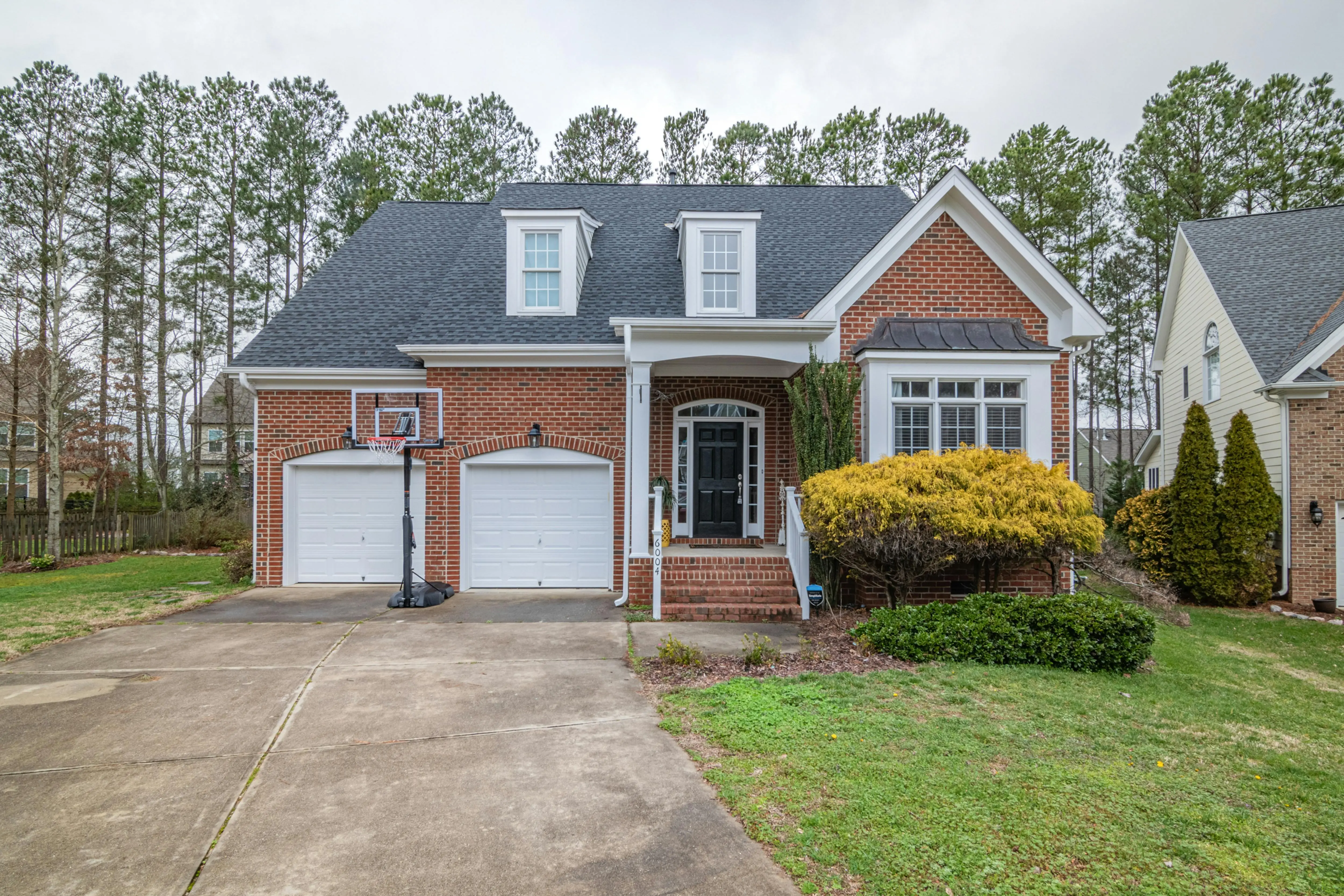
- Ideal for basketball hoops and kid chalk art
Cons
- Requires a long setback if you need turn-around space
- Can dominate a small front yard, leaving no planting beds
- Backing onto a busy road feels risky without a turnaround
Design Tips
Flare the mouth: Widen the apron to 14–16 ft where it meets the street. It’s a $200 upgrade that saves fenders and helps delivery trucks.
Plan for 2-ft shoulders: Stabilized gravel or pavers on each side prevent edge cracking when guests inevitably drive on the lip.
L-Shaped Driveway Layouts: Smart Solution for Side-Entry Garages
If your garage sits perpendicular to the street, an L-shaped layout gives you a natural “approach lane” and keeps cars out of the front yard.
Best Use Cases
- Corner lots—enter from the quieter side street
- Slopes where a straight run would exceed 12% grade
- Homes with a courtyard or front courtyard-style entry
Critical Measurements
- Inside radius at the bend: 15 ft minimum for full-size SUVs.
- Leg width: 12 ft for single lane, 20 ft for double.
- Transition zone: Add 5 ft extra before the garage to straighten parking.
Cost Reality Check
Expect 15–20% more material than a straight run, plus one extra drainage inlet at the inside corner where water naturally pools. Budget an additional $1,200–$1,800 for a 40-ft leg.
Circular & Horseshoe Driveway Layouts: Curb Appeal Deluxe
Nothing says “estate” like a graceful loop that lets guests arrive and depart without ever backing onto the street. The key is having enough frontage.
How Much Width Do You Really Need?
- Single-loop (teardrop): 55 ft minimum lot width
- Full circle with center island: 70 ft
- Horseshoe (half-circle): 45 ft if the radius is 18 ft
Island or No Island?
A planted island softens the expanse of pavement and handles storm-water. Keep it 10 ft in diameter so trucks can straddle it without clipping the curb. Install a french drain beneath the island to keep plants from drowning.
Maintenance Heads-Up
Leaf pickup takes twice as long; budget for a cordless leaf blower and a curved-edge shovel for snow. Seal-coating costs jump 25% because of the linear feet of edge.
U-Turn & Y-Shaped Driveway Layouts: The Suburban Compromise
Not enough frontage for a full loop? A U-turn (bulb-out) or Y-shaped layout gives you a turnaround bay without the circle’s footprint.
Design Math
Turnaround bay width = 20 ft, depth = 22 ft. Connect to the main drive with a 12-ft flare. This fits most suburb lots and still leaves room for one side of foundation planting.
Permit Alert
Many municipalities classify the U-turn as a “parking court” and require permeable pavers or gravel inside the bulb to reduce runoff. Check local storm-water rules before you commit.
Multi-Car & Courtyard Driveway Layouts: When You Need 4–8 Parking Spots
Big families, teen drivers, and home-based businesses need parking more than they need grass. A courtyard layout combines straight, L, and U elements into one cohesive slab.
Zoning for Head-On Spaces
Each car needs 9 ft × 18 ft clear. Add 2 ft between cars for door swing and 4 ft of drive aisle behind so someone can leave without a three-point turn. That means a six-car courtyard is roughly 34 ft × 40 ft—about the size of a tennis court.
Surface Options That Save Money
- Stamped concrete border with exposed-aggregate field—dressy but 15% cheaper than full stamped.
- Permeable pavers in parking pads only—cuts drainage fees.
- Asphalt main drive with paver accents at the entry column—gives the look without the full price tag.
Sloped Lot? How Grade Dictates Layout Options
Gravity never negotiates. Anything over a 12% grade is a slip hazard in ice and may violate local codes. Solutions:
Switchback Driveway
Cut a gentle Z-shaped drive across the slope. Each leg stays under 8% grade. Retaining walls add $25–$35 per sq ft but save thousands in excavation later.
Split Entry
Use a straight drive to a mid-slope landing, then a second leg to the garage tucked under the house. You get parking on top and a walk-out basement below.
Drainage & Local Codes: The Layout Detail That Derails Projects
Wrong slope = standing water = freeze-thaw damage. Every layout needs:
- Minimum 1% grade (1/8 in per foot) away from garage
- Concrete swales or trench drains at inside corners
- A 2-ft vegetated buffer between pavement and property line in many watershed districts
Before you fall in love with a circular design, verify the city’s “impervious surface ratio.” Going over the limit triggers storm-water retention vaults that can add $5k–$10k.
Cost Cheat-Sheet by Layout (2024 National Averages)
| Layout Style | Size Example | Asphalt | Concrete | Paver |
|---|---|---|---|---|
| Straight 12×40 ft | 480 sq ft | $2,880 | $4,320 | $7,200 |
| L-Shape 12×60 ft | 720 sq ft | $4,320 | $6,480 | $10,800 |
| Full Circle 14-ft wide, 55-ft dia | 1,800 sq ft | $10,800 | $16,200 | $27,000 |
| U-Turn Bulb 20×22 ft | 440 sq ft | $2,640 | $3,960 | $6,600 |
Prices include base, labor, and 5% waste. Excavation, permits, and retaining walls are additional.
How to Choose the Right Driveway Layout in 4 Steps
- Measure twice: Sketch your lot to scale; mark setbacks, utilities, and mature trees you want to keep.
- Count cars: Allow one parking spot per licensed driver plus one guest space.
- Check codes: Call the city for impervious surface limits, turn-radius rules, and right-of-way restrictions.
- Mock-up: Use inexpensive lawn flags and garden hoses to “drive” the layout for a weekend. Adjust before you pay for concrete.
Frequently Asked Questions About Driveway Layouts
A well-proportioned circular or horseshoe layout typically adds the highest perceived value—up to 10% in upscale neighborhoods—because it signals extra parking and an elegant entry. On smaller lots, a clean straight drive with paver accents offers the best ROI (70–80% of cost recouped).
Yes, but plan for the original slab’s joint pattern. Saw-cut a clean line, tie new rebar into the old at 90°, and install expansion foam so the legs can move independently. Budget 10% extra for demolition of the old corner plus new base stone.
Slope each quadrant 1% toward the center island and install a 12-inch french drain beneath the island. Pop-up emitters in the lawn discharge water downhill. Avoid flat grades; they always collect water somewhere.
A straight drive with a 20×22 ft U-turn bulb at the end. You gain three extra spaces (nose-to-tail) for only 440 sq ft of additional pavement—about $2,600 in asphalt. Grasspave or gravel inside the bulb can drop the price another 30% if codes allow.