
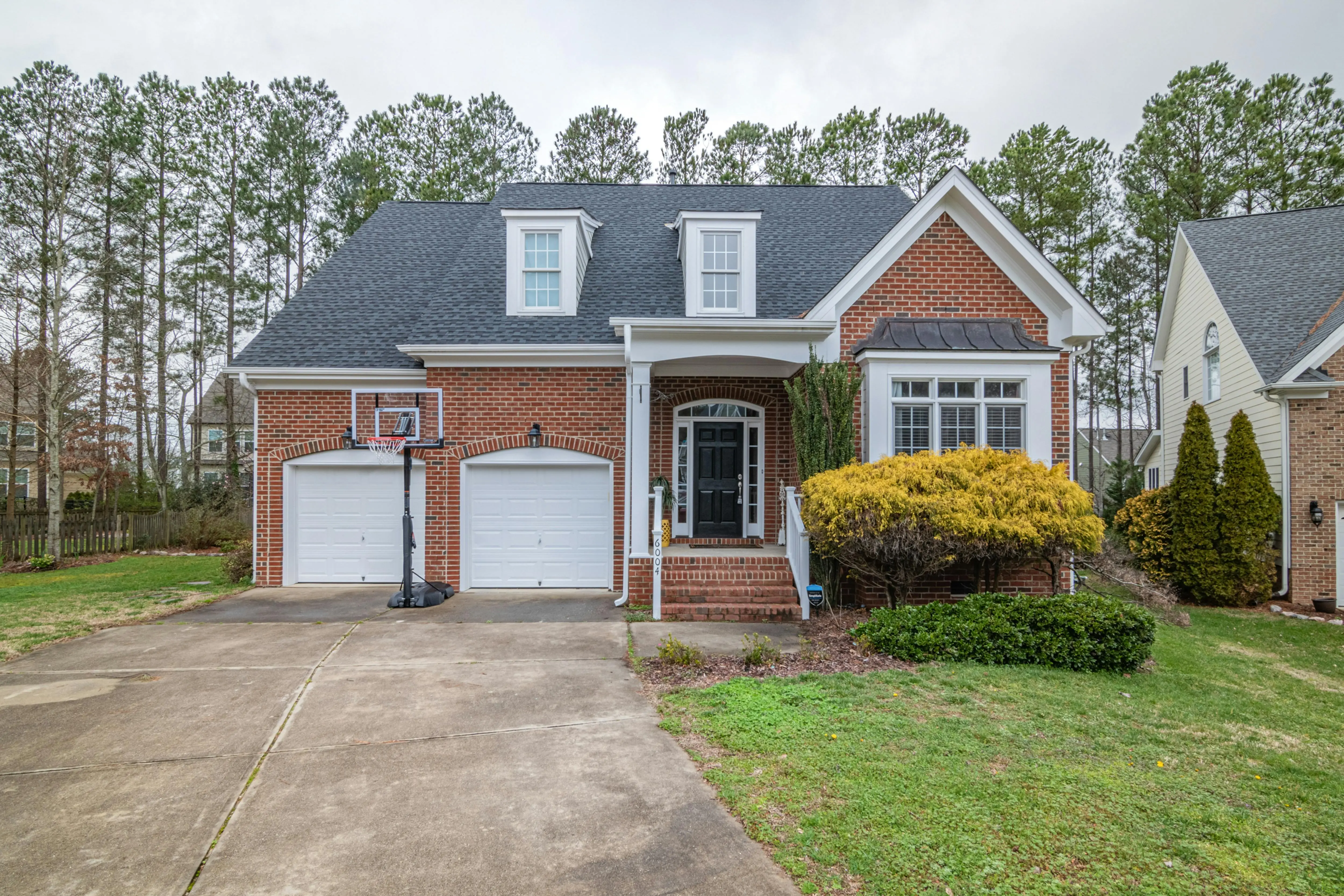
Why Driveway Edging Matters
Edging is the frame that turns a plain slab of asphalt or concrete into a polished, purposeful entrance. It keeps pavers from drifting, blocks grass from creeping in, and stops the first crack from spreading. Done right, edging also channels runoff away from your garage and gives landscape lighting a clean place to sit. In short, it protects your investment and boosts curb appeal in one weekend project.
Popular Driveway Edging Options and Installation Guide
1. Concrete Curbing
Poured-in-place or pre-cast, concrete curbs deliver a seamless, maintenance-free border that lasts decades.
- Pros: Clean lines, color options, mower-friendly height, can be stamped or stained.
- Cons: Needs forms and a truck ride; cracks if base shifts.
Best for: Homeowners who want a permanent, upscale look on asphalt or concrete drives.
2. Brick or Paver Soldiers
Lay bricks on edge in a tight soldier course to mirror the house façade or walkway.
- Pros: Classic, easy to replace one broken unit, matches existing masonry.
- Cons: Weeds love the joints; must edge-restrain or they’ll creep outward.
Best for: Concrete paver or tar-and-chip drives where color coordination matters.
3. Natural Stone
Think 6–8-in. granite cobbles or snapped bluestone set vertically.
- Pros: Nearly indestructible, natural aesthetics, handles snowplows.
- Cons: Heavy labor, higher material cost, irregular shapes take longer to fit.
Best for: Rural properties, long farm lanes, or high-end suburban homes.
4. Steel or Aluminum Landscape Edging
Thin powder-coated strips hammered into place and held with stakes.
- Pros: Invisible profile, flexible curves, quick install, low cost.
- Cons: Can heave in frost, stakes may bend under tire scrub.
Best for: Modern homes, tight budgets, or as a temporary guide before upgrading.
5. Timber or Railroad Ties
6×6 pressure-treated timbers anchored with rebar.
- Pros: Rustic look, doubles as a raised planting bed, cheap if you find reclaimed ties.
- Cons: Chemical leaching, eventual rot, hard to curve.
Best for: Long straight drives in wooded settings; avoid if you have kids or edible gardens nearby.
6. Poured Asphalt Berm
A 4-in. high ridge of hot-mix asphalt shaped with a trowel while the driveway is paved.
- Pros: Same-day install, zero seams, plow-friendly.
- Cons: Limited color (black), softens in extreme heat, hard to add later.
Best for: New asphalt jobs where budget is tight and looks are secondary.
Planning: Measure, Mark, and Match
- Measure linear feet: Walk the perimeter with a measuring wheel; add 5% for curves.
- Call 811 two business days before you dig to flag utilities.
- Choose height: 2–4 in. above driveway surface stops gravel migration yet clears most mower decks.
- Match architecture: Red brick colonial? Stick with brick or stamped concrete that carries the same hue. Ultra-modern flat roof? Go steel or smooth cast concrete.
- Check HOA rules: Many covenants restrict height, color, or material.
Tools & Materials Checklist
- Spade, flat shovel, and mattock
- Hand tamper or plate compactor (rent for $45/half-day)
- 2×4 stakes, mason line, and line level
- Quick-set concrete or polymeric sand
- 12-in. landscape spikes or ½-in. rebar
- Rubber mallet and 4-ft level
- Safety glasses, gloves, and ear protection
Step-by-Step Installation Guide
Step 1: Layout & Excavate
Paint a line 6 in. wider than your chosen edging. Dig a trench 1 in. deeper than the edging height plus 4 in. for base. Keep sides plumb so material sits tight.
Step 2: Lay the Base
Add 4 in. of crushed ¾-in. gravel, moisten, and compact in 2-in. lifts until a heel barely leaves a print.
Step 3: Set & Level
Place bricks, stone, or concrete curb on the base. Check height against the driveway with a straightedge; you want ¼ in. above the surface for drainage. Tap gently with a rubber mallet.
Step 4: Anchor & Backfill
Drive 12-in. spikes through brick joints or rebar through pre-drilled timber every 18–24 in. Backfill behind the edging with native soil plus a 2-in. layer of topsoil for turf or mulch for beds. Tamp again.
Step 5: Finish Joints
Sweep polymeric sand into brick joints, mist lightly, and let cure 24 h. For concrete curbs, tool a ¼-in. control joint every 3 ft to manage shrinkage cracks.
Step 6: Cure & Protect
Keep new concrete moist for 48 h (spray lightly twice daily). Avoid vehicle traffic for 72 h; foot traffic is OK after 24 h.
Curves, Corners, and Transitions
Use a garden hose to lay out graceful S-curves; mark with spray paint. Flexible steel edging follows the line without kerf cuts. For brick, order radial bricks (wedge-shaped) or cut standard bricks with a wet saw—wear a dust mask. Tight 90° corners look best with mitered soldier courses; overcut ⅛ in. so the joint stays tight after settlement.
Drainage & Frost Heave Tips
Water trapped behind edging freezes and lifts everything. Pitch the top of your edging ⅛ in. per foot away from the driveway so meltwater runs to the yard. Add a 4-in. perforated drainpipe behind tall curbs if the yard is soggy. In cold zones, use ½-in. closed-cell foam expansion joint where concrete meets asphalt so frost can push without cracking.
Long-Term Maintenance
- Spring: Re-sand brick joints, inspect for frost pop-outs, and tighten loose stakes.
- Summer: Trim grass with a string trimmer; mower wheels chip concrete edges.
- Fall: Clear leaves to prevent tannin stains; seal natural stone with breathable silane-siloxane.
- Winter: Use plastic shovels or rubber-cutting edges on plows; skip metal blades that chew steel edging.
Cost Snapshot (2024 National Averages)
| Material | DIY Cost / lin. ft. | Pro Installed / lin. ft. |
|---|---|---|
| Steel edging | $2–$3 | $6–$8 |
| Brick soldier | $4–$6 | $10–$14 |
| Poured concrete curb | $6–$8 (renting forms) | $14–$18 |
| Natural stone | $8–$12 | $20–$28 |
Add 10% for curves, complex cuts, or remote delivery fees.
Quick Troubleshooting
- Edging sinking: Base wasn’t compacted; pull up, add gravel, re-tamp.
- Grass invading bricks: Install a 2-in. polymeric sand top-up or use a weed torch twice a season.
- Rust bleed on steel: Light surface rust is normal; severe flake means powder coat failed—spray with cold-galvanizing paint.
Frequently Asked Questions
Not for structural reasons, but a decorative brick or stone border breaks up the “runway” look, hides minor chips, and gives landscapers a clear mowing edge.
Yes. Cut a 12-in. strip alongside the asphalt with a gas cut-off saw, remove soil, and install brick or concrete curb. Seal the fresh joint with hot rubberized crack filler to keep water out.
With a proper 4-in. gravel base and control joints, expect 20–30 years in freeze-thaw climates. Seal every 3–5 years to limit salt damage.
Steel or aluminum edging lifts out with minimal digging. Brick without mortar is second easiest. Avoid poured concrete if future expansion is likely.