
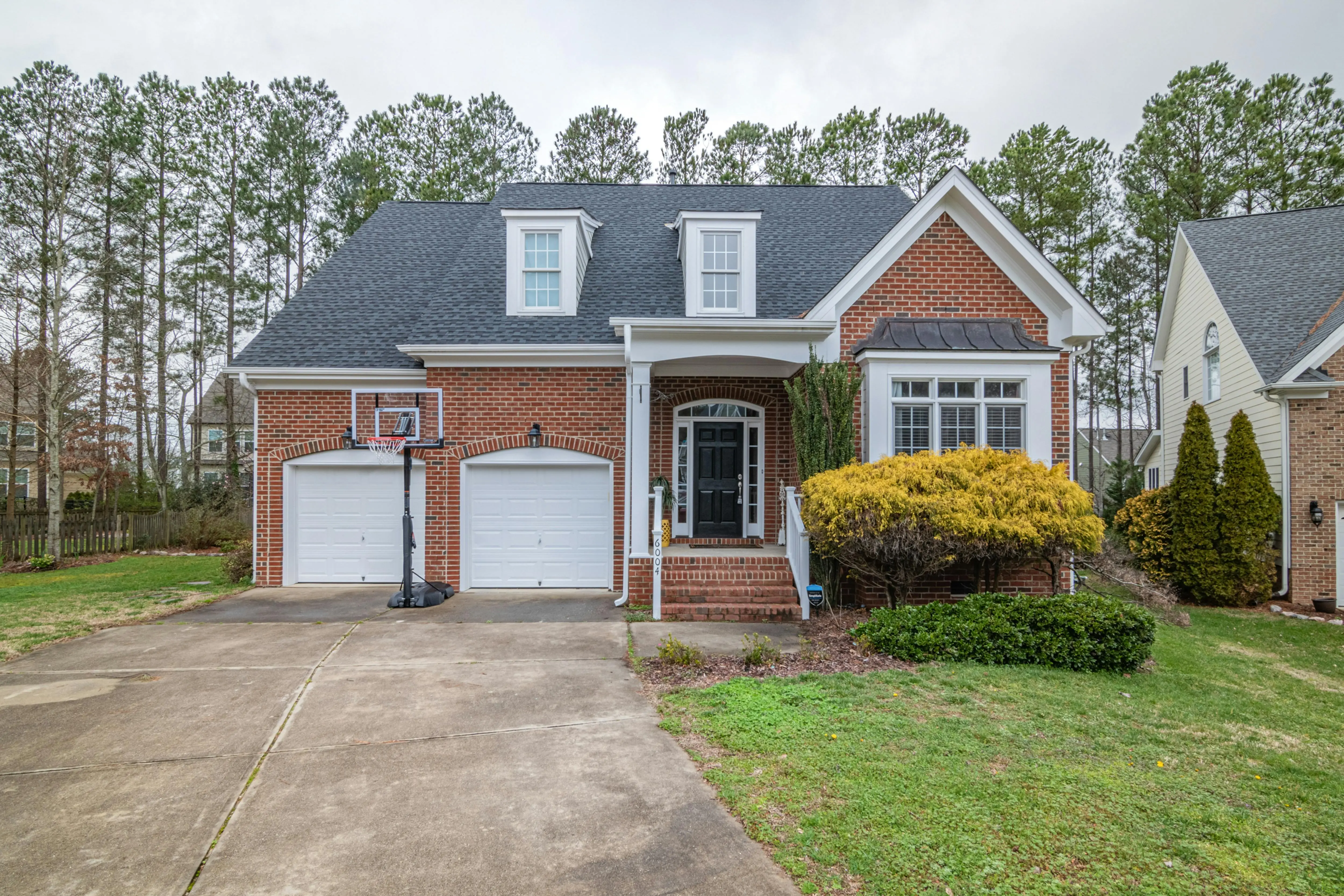
Driveway Craftsmanship: The Invisible Line Between “Nice” and “Wow”
Most neighbors will never compliment your attic insulation, but everyone notices a driveway that looks—and feels—perfect. That curb-side “wow” factor isn’t luck; it’s driveway craftsmanship. In this guide we’ll show you how to spot it, demand it, and protect it so your investment still turns heads 25 years from now.
1. The Foundation: Where Greatness Starts (and Good Jobs Stop)
Good contractors talk about “compacting the gravel.” Great ones treat the sub-base like a civil-engineering project. Here’s what separates them.
1.1 Soil Testing & Drainage First, Hardscape Second
Clay-heavy or organic soils act like sponges. A 5-minute jar test (fill a mason jar with soil and water, shake, let settle) tells you the ratio of sand:silt:clay. If clay >30 %, insist on a geotechnical report. Great installers:
- Remove topsoil 12–16 in. past the finished edge to keep vegetation from creeping back.
- Add a 4-in. perforated drain tile at the low side if slope is <1 %.
- Install a geotextile fabric between sub-soil and aggregate to stop “pumping” (clay mixing with stone).
1.2 Aggregate Layers That Actually Lock
Good: One layer of #57 stone. Great: Two-layer system:
- Bottom: 6-in. dense-graded aggregate (DGA) with 6–10 % fines for tight compaction.
- Top: 4-in. open-graded #57 stone for vertical drainage.
Each layer gets four passes with a plate compactor (minimum 5,000 lbf) followed by a single drum roller for “proof rolling.” If the roller leaves ruts >½ in., the base is reworked—no exceptions.
2. Material Mastery: Concrete, Asphalt & Pavers
2.1 Concrete: The 4000-psi Rule & Fiber Sweetener
- Minimum 4,000 psi compressive strength for freeze-thaw zones.
- 5–7 % air entrainment for Northern states.
- Micro-polypropylene fibers (1.5 lb/yd³) reduce surface shrinkage cracks by 40 %.
- Slump should be 4–5 in. for stamped work; higher slump = weaker surface.
2.2 Asphalt: Don’t Skip the Binder Course
Good crews lay one 2½-in. surface layer. Great crews:
- Install a 2-in. binder course (¾-in. stone) for structure.
- Follow with a 1½-in. surface course (⅜-in. stone) for smoothness.
- Roll at three temperatures: breakdown (300 °F), intermediate (200 °F), finish (150 °F).
2.3 Interlocking Pavers: The 3-mm Line
Joint width should be 2–3 mm. Wider gaps let weeds sprout and edge erosion start. Great masons use a 3-mm tile spacer on every corner, then vibrate the entire surface with a plate compactor and polymeric sand.
3. Expansion & Control Joints: The Stretch Marks of Driveways
Concrete expands about ⅛ in. per 20 ft when summer hits. Craftsmanship means planning for that movement before it happens.
- Depth: Control joints must be ¼ the slab thickness (1 in. deep on a 4-in. slab).
- Spacing: Joint spacing in feet = 2 × slab thickness in inches (8 ft for a 4-in. slab).
- Sealant: Use self-leveling silicone, not cheap tar. Silicone stays flexible −40 °F to 180 °F.
DIY tip: Snap a chalk line, then cut with a 7-in. diamond blade within 6–12 h of pouring—before shrinkage cracks have a chance to form.
4. Drainage & Slope: The 2 % Sweet Spot
Less than 1 % slope = puddles. More than 3 % = car scrapes and HOA complaints. Craftsmen laser-grade the sub-base to exactly 2 % (¼ in. per foot) toward the street or a trench drain. For paver driveways, they hide a 4-in. channel drain under the soldier course so water disappears—not your curb appeal.
5. Edge Restraints: Where Great Driveways Keep It Together
Without proper edging, asphalt spreads like warm taffy and pavers creep outward. Look for:
- Concrete: 6×6 #10 wire mesh or #4 rebar 18 in. on-center, 2 in. from the edge.
- Asphalt: 4×4 treated timber or 6×6 concrete curb on both sides in climates with heavy pickup/SUV traffic.
- Pavers: Snap-edge plastic restraints with 10-in. galvanized spikes every 8 in.—not the cheap 6-in. nails.
6. Surface Finishes That Age Gracefully
6.1 Broom, Stamp or Exposed Aggregate?
- Broom finish: Best for steep grades; adds slip resistance (texture depth ⅛ in.).
- Stamped: Use a liquid-release agent to avoid pull-up; seal every 2 years with high-solid acrylic.
- Exposed aggregate: Retarder spray timing is everything—wash off paste after 8–12 h when temps are 70 °F.
6.2 Sealcoating Schedules
Great asphalt craftsmen return 12 months after install for the first seal, then every 3–4 years. They use 2 coats at 0.13 gal/yd² each, with silica sand (2 lb/gal) for traction—never the watered-down “one-coat wonder.”
7. Homeowner’s 10-Point Quality Checklist
- Proof-roll the base—watch for pumping or flexing.
- Measure slump (concrete) or lay-down temp (asphalt).
- Verify joint depth with a screwdriver—should fit ¼ slab thickness.
- Check slope with a 4-ft level and calculator (¼ in. = 2 %).
- Inspect edge restraints—spikes every 8 in. minimum.
- Look for consistent joint width on pavers (3 mm).
- Seal expansion joints—finger test: should feel flexible, not brittle.
- Ask for the delivery ticket—concrete must hit 4,000 psi.
- Photo-document every layer before it’s covered.
- Get a 5-year workmanship warranty in writing (10 years for concrete).
8. Cost vs. Value: Why Great Craftsmanship Pays for Itself
Up-charge for great vs. good? About 15–20 %. Return when you sell? 50–75 % according to the National Association of Realtors. A heaved, cracked driveway is a red flag for buyers; they assume the roof and foundation were also skimped on. Spending an extra $1,200 on a proper base and joints can add $5,000+ to resale value.
9. Red Flags: 5 Signs of “Good Enough” Work
- Starts paving after lunch on a 95 °F July day (asphalt cools too fast).
- No string lines or laser level—eyeballing slope.
- Single axle roller < 1 ton; insufficient compaction force.
- Promises to “seal next week” on fresh asphalt (needs 6–12 months cure).
- Asks for full payment before final roll-out.
Driveway Craftsmanship FAQ
Keep foot traffic off for 24 h, cars off for 7 days minimum. For heavier trucks or RVs, wait 28 days to reach full 4,000 psi strength. Contractors who tell you “48 h is fine” are gambling with your investment.
Most likely the control joints were too shallow or spaced too far apart. Joints should be ¼ slab depth and spaced at 2× the slab thickness in inches. A quick saw-cut remedy can stop further random cracking.
Thickness helps, but compaction matters more. A 3-in. mat rolled to 92 % density outperforms a 5-in. mat at 85 %. Ask for a nuclear density gauge reading; 90 % is the industry floor—great crews hit 93–95 %.
Yes, if the slab is structurally sound (no major cracks or settling) and has a 2 % slope. Lay a 1-in. bedding layer of ASTM C33 sand, then proceed. Be aware door thresholds rise 2¾ in. (paver + sand), so check garage and entry clearances first.