
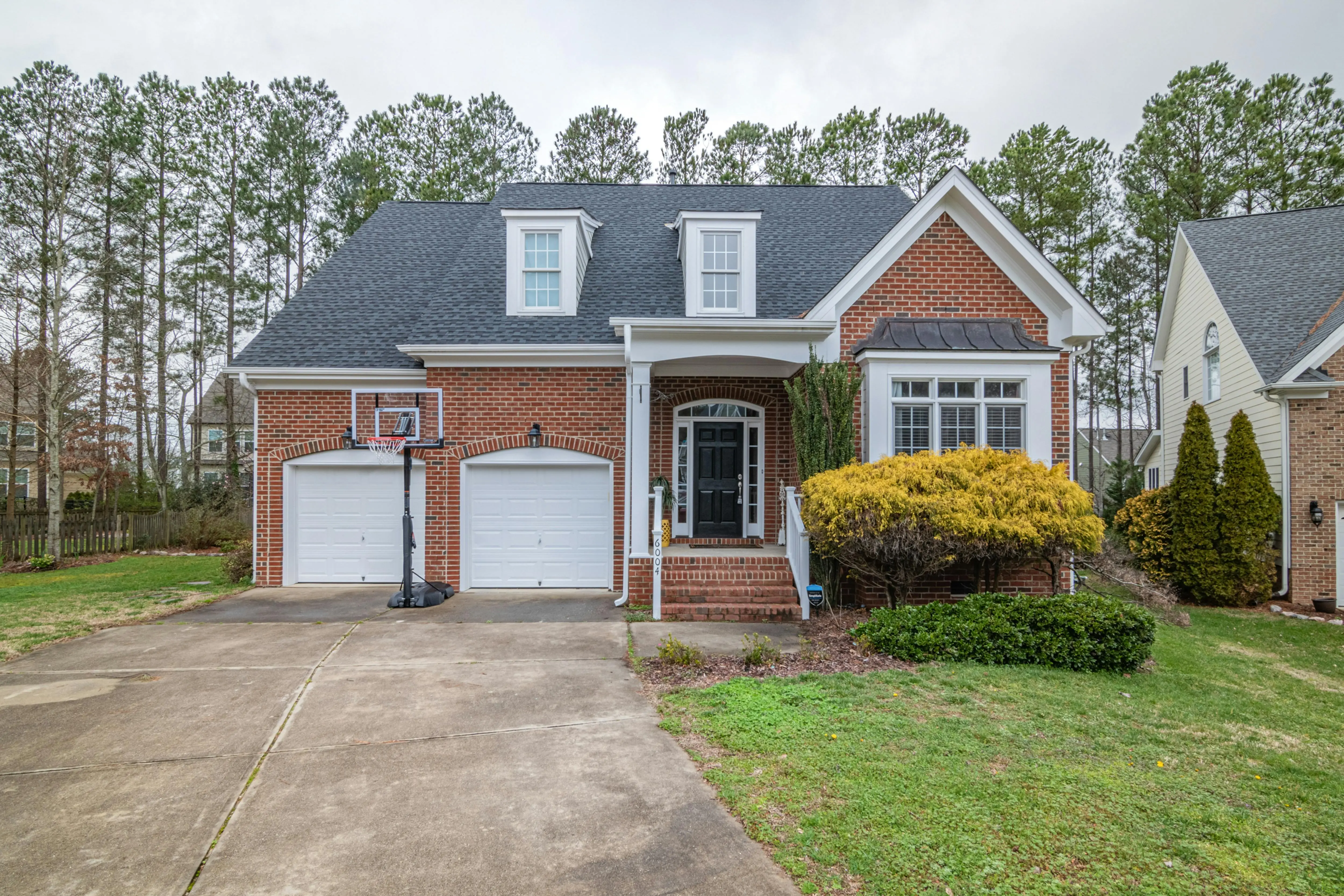
Imagine pulling into your driveway and, instead of seeing plain concrete, you’re greeted by a crisp, free-throw line, a regulation-height hoop, and a surface that drains faster than your jump shot. Driveway basketball court integration turns the most under-used slab on your property into a daily dose of fun, fitness, and curb appeal—without sacrificing parking space or resale value. Below, we’ll walk you through every step, cost, and design trick the pros at Drivewayz USA use to help homeowners nail the project the first time.
1. Planning Your Driveway Basketball Court Integration
1.1 Measure Twice, Play Once
A high-school half-court needs 30 ft × 25 ft minimum; a dribble strip for free throws can squeeze into 20 ft × 12 ft. Roll a 25-ft tape measure down the drive and mark corners with painter’s tape. Pro tip: leave 3 ft of “run-off” beyond baselines so players don’t plant a foot in the landscaping.
1.2 Check Zoning & HOA Rules
Most municipalities count a hoop as an “accessory structure.” Height limits (often 12 ft) and setback lines (usually 5 ft from side yards) apply. Call the building desk—one five-minute phone call can save a $200 citation and a hoop removal order.
1.3 Pick the Right Orientation
Face the basket north-south when possible. That prevents sunrise and sunset glare from turning every shot into a guessing game. If your driveway runs east-west, offset the hoop to the north edge so the sun sits behind the shooter during afternoon games.
2. Surface Options That Bounce Like Wood
2.1 Reinforced Concrete (The Standard)
4-inch fiber-mesh concrete with #3 rebar on 18-inch centers handles 3,000 psi and repeated bounce passes. Ask the ready-mix plant for 5–7% air entrainment; it reduces freeze-thaw cracking in northern climates. Cost: $8–$10 per sq ft, installed.
2.2 Asphalt Overlay (Budget-Friendly)
Existing asphalt can be milled 2 in and resurfaced for $3–$5 per sq ft. Add two coats of acrylic sport surfacer (texture like 60-grit sandpaper) to stop skidding. Note: asphalt softens above 90 °F—keep a portable pole with a 24-inch overhang so the base doesn’t sink.
2.3 Modular Sport Tiles (DIY in a Weekend)
Interlocking polypropylene tiles snap over old concrete and provide ½-in shock absorption. Choose a 16-mm profile for outdoor UV stability. Expect $4.50–$6 per sq ft online, plus $150 for a rubber mallet and jigsaw to cut edge pieces. Allow ⅜-in expansion gap around the perimeter.
3. Drainage: Keep the Court Dry and the Ball Bouncing
3.1 Slope Guidelines
Driveways already pitch ⅛–¼ in per foot toward the street. When you add a 60-ft three-point arc, maintain that slope; puddles at the free-throw line ruin foul-shot practice. Use a laser level to spot low spots—anything deeper than ⅜ in gets filled with a self-leveling overlay.
3.2 Channel Drains for Wide Courts
If your driveway widens to 24 ft, install a 4-in-wide trench drain across the high side. Tie the drain into the existing downspout line with a 4-in PVC SDR-35 pipe. Cover the grate with a removable sediment basket so maple seeds don’t clog the line every spring.
4. Hoop Systems That Don’t Crack Concrete
4.1 In-Ground Sleeve vs. J-Bolt
A 42-in ground sleeve set in 4 sq ft of concrete lets you remove the pole if you need the parking space back. J-bolt patterns (5/8-in threaded rod) are stronger but permanent. Drivewayz USA specs a 48-in frost footing below the frost line—no heaving, no hairline cracks.
4.2 Overhang & Backboard Size
4-ft overhang keeps the base out of the driveway joint and gives 24 in of lay-up room. Pair it with a 54-in backboard for driveways 20 ft wide; go 60-in if you have 24 ft. Tempered glass ⅜-in thick offers true arena rebound; acrylic saves $200 and still beats polycarbonate.
5. Lighting for Night Games Without Annoying Neighbors
5.1 LED Shoebox Fixtures
Two 100-watt LED fixtures mounted 14 ft high on side poles produce 10 foot-candles at center court—half the brightness of a pro arena, but enough for safe play. Use 3000-K “warm” LEDs to cut glare and keep the neighbors happy; shielded housings eliminate light spill.
5.2 Smart Controls
Plug lights into a Wi-Fi smart switch set to auto-off at 10 p.m. Most cities’ noise ordinances relax after 10, so the auto-off doubles as a courtesy curfew. Cost: $89 switch plus $250 electrician fee if you tie into the garage panel.
6. Line Striping That Lasts
6.1 Paint vs. Tape vs. Thermoplastic
- Latex court paint: $40/gallon, two coats last 2–3 years. Roll with a 4-in foam sleeve; mask with 3M 233+ tape for crisp edges.
- Outdoor vinyl tape: 60-mil, $1.25/ft. Sticks to sealed concrete; peel off if you sell and need a clean look.
- Thermoplastic: Melt-on striping lasts 8+ years. Needs a $500 propane heat gun rental—best for community courts or HOA projects.
6.2 Key Dimensions Quick Guide
- Free-throw line: 15 ft from the backboard face.
- Key (the lane): 12 ft wide (HS) or 16 ft wide (college/NBA).
- Three-point arc: 19 ft 9 in (HS), 22 ft 1¾ in (NCAA), 23 ft 9 in (NBA) from the center of the hoop.
7. Landscaping Buffer & Safety Zones
7.1 3-Ft Perimeter Rule
Keep shrubs, retaining walls, and parked cars at least 36 in beyond the baseline. A 3-ft crushed-stone border (¾-in river rock) stops runaway balls and protects sprinkler heads.
7.2 Low-Glare Fencing
A 6-ft black chain-link backstop with 1¼-in mesh stops 90% of air balls without looking like a prison yard. Set posts 18 in outside the court edge so the fence fabric doesn’t interfere with out-of-bounds calls.
8. Year-Round Maintenance Checklist
- Spring: Pressure-wash at 1500 psi, re-caulk expansion joints with Sikaflex-1a.
- Summer: Roll on a fresh coat of acrylic sealer every two years; it keeps colors vivid and reduces skin abrasion.
- Fall: Blow leaves weekly; tannic acid stains are almost impossible to remove from unsealed concrete.
- Winter: Use plastic shovels only; metal blades scrape off sport-tile coatings. Calcium-chloride pellets melt ice faster and safer than rock salt.
9. Real-World Cost Breakdown (12 ft × 24 ft Dribble Strip)
| Item | Low | High |
|---|---|---|
| Remove & replace 288 sq ft concrete | $2,300 | $2,900 |
| In-ground pole (54-in glass) | $700 | $1,200 |
| LED lighting (2 poles, 2 fixtures) | $600 | $900 |
| Striping & surfacer | $250 | $400 |
| Permit & HOA docs | $75 | $150 |
| Total | $3,925 | $5,550 |
Finance with a 0%-for-12-month home-improvement card and the project costs about $330/month—less than a family gym membership.
10. ROI & Curb Appeal: Will Buyers Love It?
According to the National Association of Realtors, “sport court” is one of the top five outdoor features requested by millennial buyers. A professionally installed driveway basketball court integration can recoup 68–78% of its cost at resale—higher than a basic patio (55%) and comparable to a minor kitchen remodel. Keep the pole removable and the striping neutral (no neon green) to appeal to the broadest market.
Frequently Asked Questions
Yes—if the slab is in good shape (no cracks wider than ¼ in), you can install modular sport tiles directly on top. Clean with a degreaser, patch cracks, then snap tiles together. The ½-in air gap underneath allows moisture to escape and prevents mold.
Standard passenger cars exert 50–70 psi static load; a 200-lb player landing a lay-up hits about 4–5 psi. Reinforced 4-in concrete rated at 3,000 psi easily handles both. Just avoid placing the pole’s footing in the tire track zone.
Install shielded, warm-white LEDs angled downward, add an 10 p.m. auto-off timer, and send a quick text heads-up before weekend tournaments. Most noise ordinances allow play until 10 p.m.; keeping games under 70 dB (normal conversation is 60 dB) keeps complaints at zero.
Permits vary by city. If you’re only bolting a portable hoop to existing concrete, probably not. If you pour new footings, run 120 V lighting, or erect a permanent pole, most jurisdictions want a $50–$150 accessory-structure permit. A five-minute call to your local building desk clarifies everything.