
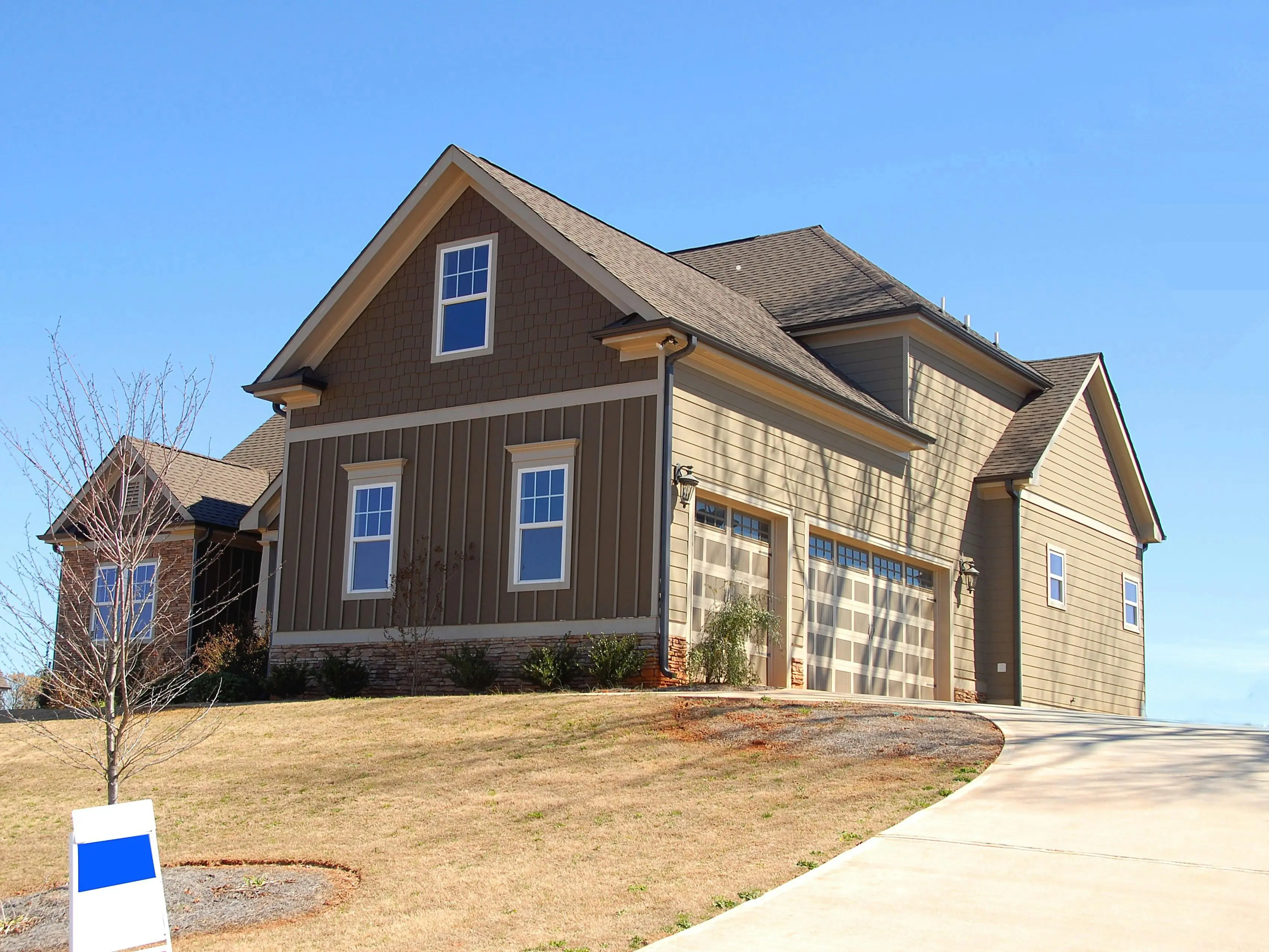
What Makes a Driveway “Craftsman”?
Think of the driveway as the handshake of your home. On a Craftsman bungalow, that handshake should feel warm, honest, and handmade. Craftsman home driveways repeat the same design DNA you see in tapered porch columns, overhanging eaves, and earthy materials: simplicity, natural texture, and visible craftsmanship.
The goal is not to look brand-new; it’s to look like it belongs—yesterday, today, and fifty years from now. Below we’ll show you how to choose materials, colors, and layouts that honor the Arts & Crafts movement while standing up to SUVs, Amazon vans, and winter salt.
Core Design Principles for Craftsman Home Driveways
1. Honest Materials
Stick to what nature created or what a local craftsman could have installed in 1915. That means real stone, clay brick, or concrete made to mimic those materials. Avoid stamped patterns that scream “2010 McMansion.”
2. Earth-Toned Palette
Pull colors from your roof, foundation, or window trim. Typical Craftsman pallets: warm taupe, rusty iron oxide, moss green, and deep ochre. If the driveway is lighter than the house body, keep it only one or two shades lighter so it doesn’t steal focus.
3. Horizontal Lines & Banding
Runners (narrow bands of brick or stone set flush with the main field) echo the porch railings and window muntins. Aim for a 3:1 or 4:1 ratio—three parts main material, one part accent strip.
4. Integrated Landscape
Soft edges beat hard edges. Allow a 12–18″ planting buffer between the tire track and lawn. Use low, mounding perennials like catmint or creeping thyme; they hide the driveway’s shoulder without blocking sightlines.
Best Materials for Craftsman Home Driveways
Clay Brick Pavers
Historic, fade-proof, and locally made in many states. Choose tumbled or “antique” edge styles. Standard herringbone or basket-weave patterns feel authentic. Seal every 3–4 years to prevent efflorescence.
Natural Stone: Flagstone & Cobblestone
For informal, “cottage” Craftsman homes, Pennsylvania bluestone or Oklahoma flagstone slabs laid on a concrete base give an old-world random pattern. Edge the drive with granite cobbles (jumbo size 9×5×5) to handle tire scrub.
Exposed Aggregate Concrete
Budget-friendly but still textural. Ask the ready-mix plant for river gravel instead of limestone chips for warmer tones. Have the contractor seed additional pebbles by hand before the surface is floated to get that chunky Arts & Crafts feel.
Stabilized Granite or Limestone Fines
Perfect for secondary paths or longer rural drives. Mix 3/8″ minus crushed granite with a liquid stabilizer (G3, Stabilizer Solutions). Water, compact, and you get a permeable, custard-colored surface that crunches like a gravel path but won’t wash away.
Layout Ideas That Respect the Original Footprint
Single Strip vs. Courtyard
Most 1910–1930 Craftsman homes had a narrow single-strip drive leading to a detached garage at the alley. If your garage is still in back, keep the drive slim—8 ft wide is enough for today’s cars and leaves more planting space.
Turnaround & Parking Court
Where the garage was converted to living space, a front turnaround prevents three-point turns on a busy street. Use a 60-ft diameter hammerhead or a 20×20-ft parking bay off to one side, separated by a short brick wall or hedge so it reads like a “motor court,” not a parking lot.
Radius vs. Straight Edges
Match the porch curve. If your entry stair has a generous radius, echo it in the driveway apron. Otherwise, stick to straight lines with softened 18-inch radius corners—easier to shovel and truer to the era.
Drainage Solutions That Stay Hidden
Arts & Crafts design hates plastic grates. Use these stealth tactics:
- Permeable paver joints: 3/8″ gap filled with ASTM #8 angular stone. Captures first 1″ of rainfall, eliminating puddles.
- Granite cobble swale: Run a 12″-wide strip of setts down the center or along the edge; water disappears between stones.
- Ribbon driveway: Two 24″ concrete strips with a grass or gravel median. Vintage look, built-in infiltration.
Period-Appropriate Lighting & Hardware
Choose oxidized copper or burnished brass fixtures with seedy glass. Post lights should be no taller than 42″ so they don’t tower over the porch. Mount low-voltage LED lamps on 2700 K “warm white” for that gas-light glow. Avoid solar stakes—they’re too flimsy and modern-looking.
Cost Breakdown (2024 National Averages)
Prices include tear-out, 4″ aggregate base, and installation. Add 10–15% on the coasts.
- Clay brick (herringbone, sand-set): $14–$18 / sq ft
- Exposed aggregate concrete: $8–$11 / sq ft
- Flagstone slabs on concrete: $19–$26 / sq ft
- Stabilized decomposed granite: $4–$6 / sq ft
Pro tip: Blend materials to save money. Use brick or stone for the 12-ft-wide “tire track” lanes and stabilized granite down the middle—cuts material cost by 30% and looks intentional.
Low-Maintenance Upkeep Schedule
Spring
- Pressure-wash on low setting (under 2000 psi) to avoid dislodging joint sand.
- Inspect for sunken pavers; mark with chalk so a pro can lift and re-set before summer heat.
Fall
- Apply breathable, silane/siloxane sealer to brick or exposed aggregate—halts freeze-thaw spalling.
- Fill new joints with polymeric sand where washout occurred.
As-Needed
- Oil drips: Sprinkle cat litter overnight, sweep, then scrub with dish soap and hot water.
- Weeds: Spot-spray 20% horticultural vinegar; avoid salt—it stains stone.
Working With Historic Preservation Boards
If your house is locally landmarked, submit a “certificate of appropriateness.” Boards love:
- Material samples laid on-site for 48 hrs so neighbors can see color in different light.
- Photos of neighboring period driveways—context matters more than an arbitrary rule book.
- A landscape plan that shows new trees to offset any added impervious surface.
Drivewayz USA routinely provides stamped engineering drawings and color boards that satisfy most heritage commissions; approvals typically take 2–4 weeks.
DIY vs. Hiring a Craftsman Driveway Specialist
When to DIY
Stabilized granite paths, small brick landing pads, or ribbon driveway extensions under 150 sq ft are weekend projects if you own a plate compactor and a 4-ft level.
When to Call Drivewayz USA
- More than 300 sq ft—saves your back and ensures proper base thickness.
- Site slope exceeds 4%—requires re-grading and geo-grid to stop settling.
- Historic review or HOA approval—our portfolio speeds permits.
Frequently Asked Questions
Yes. Set brick or stone on a concrete-edge restraint and use a rubber-tipped plow blade. Avoid steel cutting edges and leave ½″ of snow—permeable joints actually reduce refreeze by letting meltwater drain.
Drivewayz USA maintains a brick bank of reclaimed pavers salvaged from demolition sites. We can usually locate within 5% color variation. If not, we blend two closest shades in a random ratio so new work reads as original.
Seven days for passenger cars, ten for trucks. We’ll tape a small test piece of plastic to the surface—if it darkens after 24 hrs, moisture is still escaping; wait another day.
Absolutely. Grass median means 40% less paving to seal or sweep. Install a low-profile mowing strip of brick on edge so your string-trimmer never hits concrete. Water the grass zone once a week in summer; otherwise, it’s the easiest segment of your yard.