
Why Cold Climates Demand a Smarter Driveway Choice
Minnesota winters are famous for three things: heavy snow, weeks of sub-zero temperatures, and the dramatic freeze-thaw cycle that can turn an average driveway into a crumbling mess. The material you choose has to survive rock salt, scraping plow blades, and the expansion of water turning to ice. Pick the wrong surface and you’ll be budgeting for repairs before the Twins open their season.
In this guide we’ll compare the five most common driveway materials, rank them for Minnesota’s cold climates, and give you real-world maintenance checklists you can start using today.
What “Cold-Climate-Proof” Really Means
Before we talk materials, understand the four winter stressors every driveway in Minnesota must survive:
- Freeze-thaw cycles: Water enters tiny cracks, freezes, and expands up to 9%. After 90–120 cycles a winter, those cracks become potholes.
- Rock-salt & magnesium chloride: De-icers lower water’s freezing point, increasing the number of freeze events and chemically attacking certain binders.
- Metal plow edges: A 1,200-lb. truck blade can gouge soft or brittle surfaces.
- Ground heave: Clay soils common around Minneapolis expand when frost penetrates 40–60 in., lifting and tilting slabs.
Any material that can’t handle all four will cost you more long-term than the up-front savings you thought you scored.
Driveway Materials Ranked for Minnesota Winters
1. Asphalt—The Freeze-Thaw Champion
Asphalt’s flexible binder (bitumen) expands and contracts with temperature swings, making it the go-to for northern highways. For residential driveways, opt for a “MN-Class 4” mix with 5.5–6% liquid asphalt content and ¾-inch aggregate. Ask your contractor for a 3-inch compacted layer over an 8-inch aggregate base; the extra base thickness absorbs frost heave.
Cold-climate upgrades:
- Seal-coat every 2–3 years with a coal-tar or acrylic sealer to block salt intrusion.
- Request a “plow-friendly” 2% crown so blades don’t scrape the center hump.
- Install polypropylene fibers in the top lift; they add micro-flexibility and reduce hairline cracks.
Life expectancy in MN: 18–22 years with scheduled maintenance.
2. Air-Entrained Concrete—Hard but Brittle
Concrete’s compressive strength is great… until a single crack lets water in. The fix is microscopic air bubbles. Minnesota ready-mix plants automatically entrain 5–8% air, giving frozen water room to expand. Pair that with 4,000 psi minimum strength, 6-inch slab thickness, and 18-inch center-to-center contraction joints.
Cold-climate checklist:
- Never use standard rock salt; switch to calcium-magnesium acetate (CMA) or sand for traction.
- Apply a penetrating silane/siloxane sealer the summer after install, then every 4–5 years.
- Insist on ½-inch rebar grid or fiber mesh to hold cracks tight if they do form.
Life expectancy in MN: 25–30 years, but patch repairs cost 3× more than asphalt.
3. Concrete Pavers—Flexible & Replaceable
Interlocking pavers move independently, so frost heave rarely cracks them. Choose a minimum 60 mm thickness for driveways (80 mm if you park a ¾-ton truck). Edge restraints are critical; plastic or aluminum spikes keep the perimeter from spreading under plow pressure.
Installation tips for Minnesota:
- Bed on 1-inch concrete sand over an open-graded 12-inch crushed-rock base for drainage.
- Fill joints with polymeric sand rated to –30°F; standard sand washes out during spring melt.
- Buy 5–10% extras; if a plow chips one, you pop it out and swap in a new unit in 15 minutes.
Life expectancy: 30-plus years; higher up-front cost but lowest lifetime repair bill.
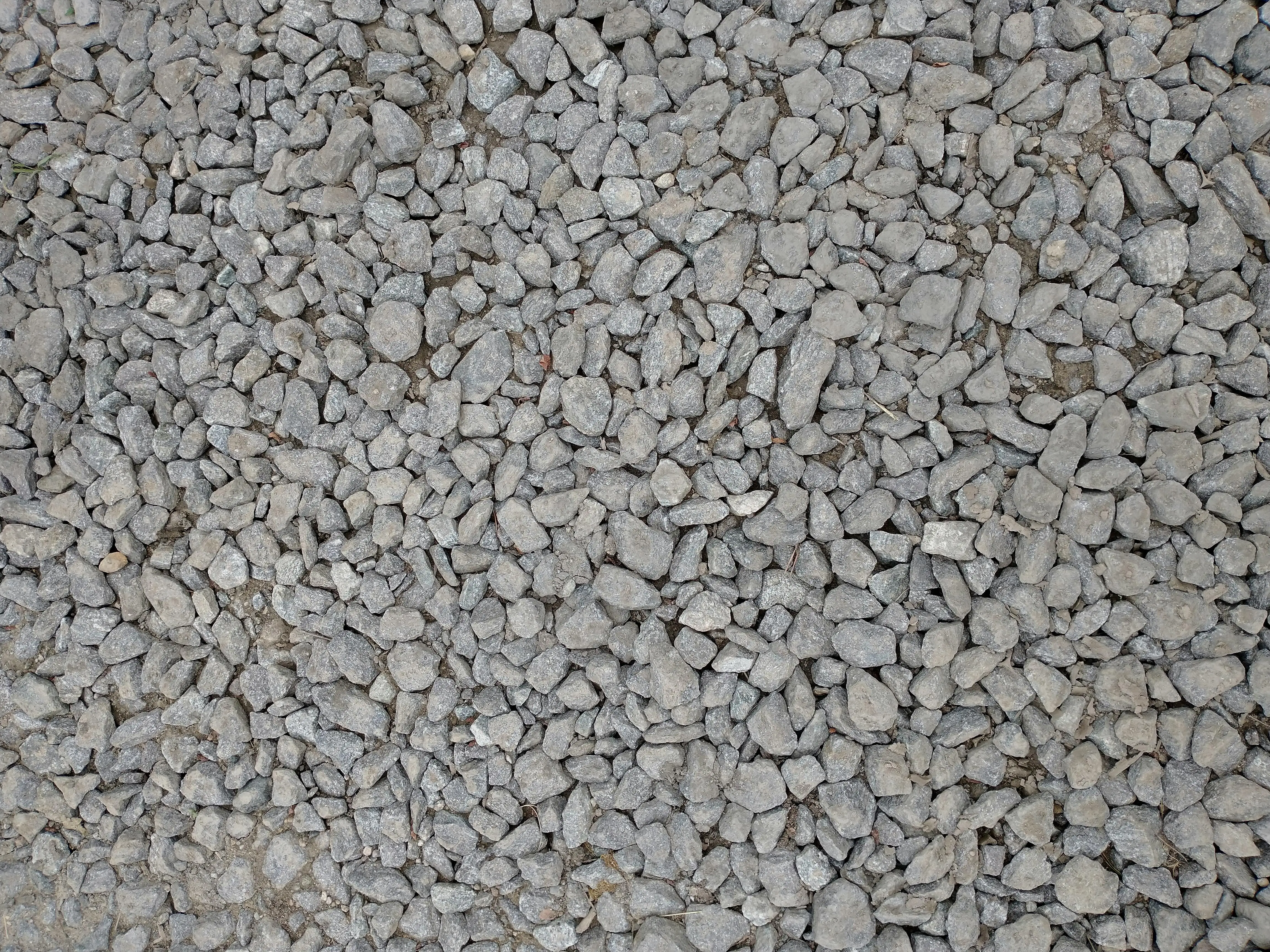
4. Gravel—Cheap, But High Winter Maintenance
Gravel never cracks because it’s already broken, but it scatter-bombs under tire spin and snow removal. Use locally sourced limestone or recycled concrete with a ¾-inch minus gradation; fines lock the top layer together. Lay geotextile fabric under the first lift to prevent frost sinking into the sub-grade.
Winter survival hacks:
- Install 18-inch rolled gravel “curbs” along each edge so plows don’t push stone into the yard.
- Refresh 1 inch of new gravel every other spring; budget roughly $0.45 per square foot.
- Use a driveway drag or box blade after final frost to re-establish crown and pothole fill.
Life expectancy: Indefinite if you don’t mind annual grooming.
5. Stamped & Decorative Concrete—Avoid in Snow Belt
Stamped patterns look gorgeous… until the first time you shovel. Raised textures catch plow blades, and the colored surface layer is only ¼-inch thick. Once salt eats through, plain gray concrete shows underneath. If aesthetics are non-negotiable, limit stamping to a heated porch landing and switch to a plow-proof material for the main drive.
Bonus Upgrade: Radiant Heat Systems
Electric cable or hydronic tubes embedded in concrete or pavers keep the surface just above 32°F, eliminating plow damage and de-icer chemicals. Expect $12–$18 per sq. ft. installed and $0.25–$0.45 per sq. ft. per snow event in operating cost. ROI is highest for north-facing slopes or homeowners with mobility issues who can’t shovel.
Minnesota Price Snapshot (Installed, 600 sq. ft. Driveway)
- Recycled gravel: $1,200–$1,800
- Hot-mix asphalt: $3,000–$4,200
- Air-entrained concrete: $4,800–$6,600
- Concrete pavers: $7,200–$9,600
- Pavers + radiant heat: $14,000–$18,000
Prices include excavation, base, and 5% state tax. Add 10% in the Twin Cities metro for higher labor rates.
Season-by-Season Maintenance Calendar
Fall (Before First Frost)
- Fill any crack wider than ¼ inch with polyurethane or hot-rubber sealant.
- Apply a penetrating or surface sealer once daytime highs stay below 60°F so product cures slowly.
- Mark driveway edges with 36-inch fiberglass poles so plow drivers stay on track.
Winter (December–March)
- Use plastic or rubber-tipped blades; steel edges void many contractor warranties.
- Skip rock salt on concrete younger than 12 months; use CMA or sand.
- Clear snow before compaction; drive-over traffic turns fluffy snow to ice within hours.
Spring (April–May)
- Pressure-wash to remove chloride residue; re-seal asphalt if water stops beading.
- Inspect for new frost heave; schedule slab-jacking or base under-sealing before cracks widen.
- Top-up gravel and re-grade; spring rains expose winter wash-outs.
How to Choose in Three Steps
- Budget check: If you need under $5k now, choose asphalt; it balances freeze resistance and price.
- Snow-removal style: Heavy plow traffic? Pavers or thick asphalt hold up best. Shovel-only? Concrete works.
- Long-term ownership: Plan to stay 20 years? Concrete pavers cost least over decades because single-unit replacement beats wholesale resurfacing.
Still undecided? Drivewayz USA offers free site evaluations and core-sample testing so you know your soil frost depth before you spend a dime.
Minnesota Cold-Climate Driveway FAQ
Only if ground temps stay above 45°F for at least 48 hours after rolling. Cold binder cools too fast and won’t compact, leading to premature raveling the first spring. Schedule before mid-October or wait until April.
Standard rock salt bleeds pigments and causes surface spalling. Use CMA or sand, and apply a colloidal silane sealer every 3–4 years to lock out chlorides.
Electric cable systems shut off unless you have a whole-house generator. Hydronic systems (glycol & boiler) can run on natural gas, keeping the loop warm even when the lights go out.
Wait a full 7 days for vehicle traffic; concrete gains strength slowly in cold weather. Keep the surface covered with insulated blankets so frost doesn’t strike before 500 psi tensile strength is reached.