
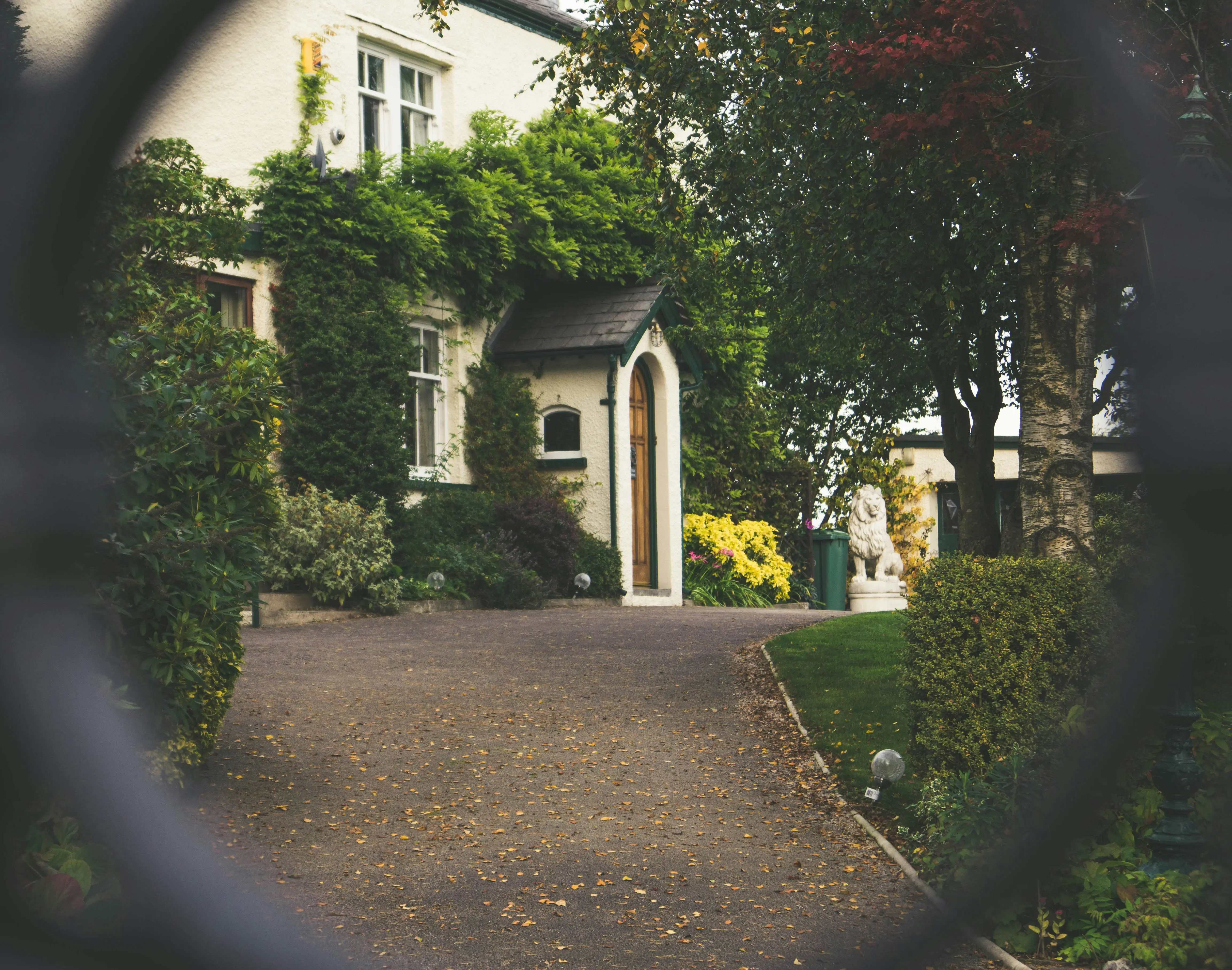
Black Driveway vs Light Driveway: The Two Big Factors—Heat & Looks
Choosing a driveway color feels like a style decision… until the first summer heatwave or snow day hits. The shade you pick—dark asphalt or pale concrete—changes how hot the surface gets, how long it lasts, and how your home photographs on listing day. Below, we’ll unpack the science and the aesthetics so you can make a confident, informed choice.
How Color Controls Temperature
Albedo 101: Why Black Gets Hot
Albedo is the fancy word for how much sunlight a surface reflects. Fresh asphalt reflects only 4–8 % of solar energy; the other 92–96 % turns into heat. Light gray concrete flips that script, reflecting 35–55 %. Translation: on a 90 °F afternoon, a black driveway can hit 140–150 °F while a light driveway stays around 105–115 °F—cool enough to walk on barefoot.
What Extra Heat Does to Your Property
- Softened asphalt: Above 120 °F, asphalt binders soften and tire steering can “scuff” the top layer.
- Thermal cycling: Daily swing from 150 °F at noon to 75 °F at night stresses the surface, shortening life by 8–12 %.
- Micro-heat island: A hot driveway radiates warmth toward the garage and lower floors, raising cooling costs 2–4 %.
Curb Appeal: Which Color Sells?
Black Driveway Vibes
Jet-black asphalt frames green lawns and white trim like a tuxedo—crisp, formal, and “expensive.” It hides oil spots well but shows every pollen wave and dust mote. Works best on colonial, modern-farmhouse, and brick homes that already carry strong contrast.
Light Driveway Vibes
Light concrete or pale paver tones echo beach, desert, and prairie palettes. They enlarge small front yards by reflecting light upward and pair cleanly with stucco, stone, or mid-century siding. Downside: every tire mark and rust drip is visible until you pressure-wash.
Neighborhood Comps & ROI
Realtors in hot-sun markets (Phoenix, Vegas, Dallas) report that light driveways add $1,500–$3,000 of perceived value because buyers worry about scorched feet and faded car tires. In northern towns, black driveways signal “snow melts faster,” keeping offers steady. Check Google Street View for your block—if eight of ten drives are dark, a light one can either stand out heroically or look like a mismatch. Ask a local agent for five recent comps before you commit.
Material Choices Within Each Color Family
Black/Asphalt Spectrum
- Standard asphalt: Cheapest, turns gray within two years unless seal-coated.
- Recycled rubber-infused asphalt: Stays flexible, 15 % cooler, darker longer.
- Chip-seal with black granite: Adds sparkle, hides scratches.
Light/Reflective Spectrum
- Poured concrete: Classic broom-finish, can be integrally colored beige or white.
- Exposed aggregate: Light river pebbles bounce even more light.
- Permeable pavers: Ivory or limestone tones, eco-friendly, LEED points.
Upkeep Reality Check
Black Driveway Maintenance
- Seal-coat every 2–3 years ($0.15–$0.25 per sq ft) to lock in that deep color and stop UV oxidation.
- Oil drips blend in, but gas spills soften sealer—wipe within 30 minutes.
- Fill cracks in fall; dark surface hides repairs better.
Light Driveway Maintenance
- Annual pressure-wash (1,500–2,000 psi) keeps brightness; budget $150 pro or half-day DIY.
- Apply silane-siloxane sealer every 4–5 years to block salt and leaf stains.
- Spot-tire marks with degreaser and a stiff broom before they tan the pores.
Installed Price & Lifetime Value
National averages for a 600 sq ft two-car driveway:
| Material | Color | Install Cost | 40-Year Cost* |
|---|---|---|---|
| Standard asphalt | Black → Gray | $2.50 / sq ft | $4.20 (includes 5 seal coats & 1 overlay) |
| Concrete pour | Light gray | $6.00 / sq ft | $7.50 (includes 2 reseals & 1 crack repair) |
| Permeable paver | Ivory | $9.50 / sq ft | $11.00 (includes joint refill & 2 cleanings) |
*Includes inflation-adjusted maintenance.
Regional Climate Cheat-Sheet
Hot & Sunny (Zone 9–10)
Go light or pay the price: softer asphalt, sticky shoes, higher AC bills. If you love black, request a “cool pavement” seal coat with recycled glass beads that raise reflectance to 25 %.
Snow & Ice (Zone 4–6)
Black wins. Solar heat gain melts snow faster, cutting shovel time 20–30 %. Pair with radiant coils under concrete for the ultimate cheat code.
Mixed Climate (Zone 7–8)
Choose by façade color first, then budget. Either works if you seal properly and fix cracks early.
3 Quick Homeowner Tests Before You Decide
1. The Towel Test
On a sunny 85 °F day, lay a black towel and a white towel on your existing pavement at 2 p.m. After 15 minutes, feel the difference—your feet will vote.
2. The Photo Mock-Up
Take a straight-on photo of your house. In a free editor, paint the driveway black, then concrete-gray. Post to social media and ask friends to pick; tally after 24 hours.
3. The Touch Test
Visit a neighbor’s black asphalt and a light concrete driveway at noon. Touch both with your palm for three seconds. If you flinch on black, so will future buyers—and your dog’s paws.
Green Considerations
Urban Heat-Island Points
Many cities now give tax credits for reflective “cool” pavements. A light driveway can knock 1–2 °F off adjacent air temps, helping you qualify.
Embodied Carbon
Asphalt is 100 % recyclable; concrete is not. If you choose black, request 30 % RAP (recycled asphalt pavement) to shrink your carbon footprint 18 %.
Decision Checklist
- ☐ Average summer highs above 90 °F? → Lean light.
- ☐ Snow blower in your garage? → Black helps melt.
- ☐ HOA mandates earth tones? → Match palette.
- ☐ Kids or pets who play on the drive? → Light = cooler paws.
- ☐ Budget capped at $4 / sq ft? → Black asphalt + seal coat.
- ☐ Want “Instagram ready” modern look? → White concrete or porcelain pavers.
FAQ: Black Driveway vs Light Driveway
Indirectly, yes. The extra heat can raise tire pressure 2–3 PSI on scorching days, increasing center-tread wear if you don’t bleed pressure. Park in the garage or shade during heatwaves to offset the issue.
You can apply a gray “cool pavement” seal coat or an acrylic tint, but expect only 30–40 % reflectance gain and plan to re-coat every 3 years. Full replacement with concrete or overlay is the only way to reach true light-pavement albedo.
Usually 2–4 hours longer in sub-freezing temps because the surface absorbs less solar energy. Use calcium-magnesium acetate ice melt to avoid surface damage, or invest in a rubber-bladed snow pusher to scrape without scratching.
Black. Hairline cracks blend into the dark backdrop, whereas on light concrete they show as dark lines. If aesthetics trump heat, seal cracks early and choose an asphalt overlay every 12–15 years.