
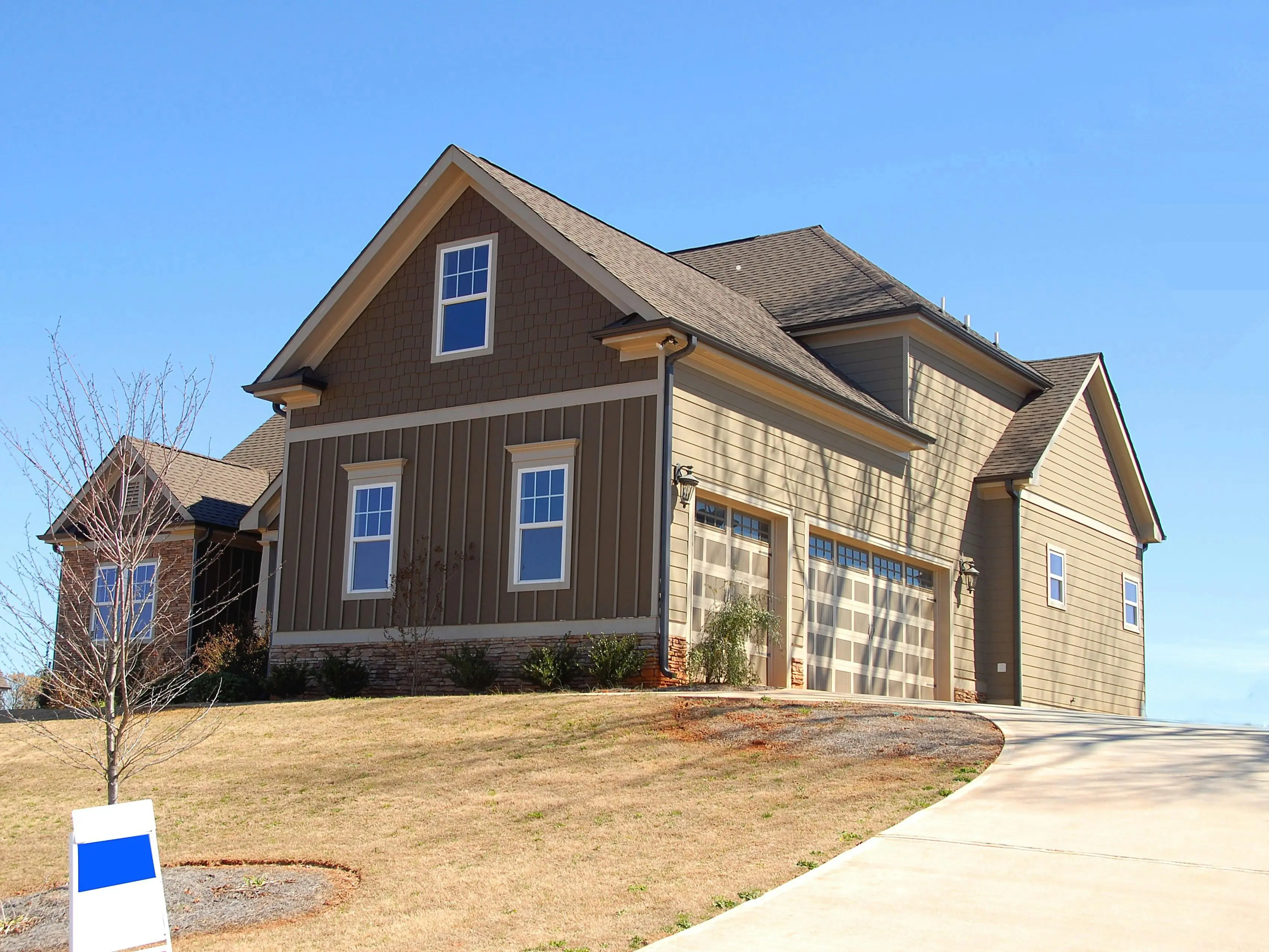
Why the Right Material Matters on a Slope
A steep driveway is part functional access, part safety feature. Choose the wrong surface and every rainstorm turns it into a slip-and-slide; every freeze leaves you spinning wheels at the bottom. The best driveway material for steep slopes and hills has to do three things at once:
- Lock in place so gravel doesn’t migrate downhill
- Give tires reliable traction in wet or icy weather
- Handle runoff so water doesn’t undermine the base
Below we break down the six surfaces homeowners ask about most, rank them for slope-friendliness, and share pro tips you can act on today.
Quick-Look Comparison: Slope Performance vs. Cost
| Material | Max Recommended Grade* | Skid Resistance | Installed Price (US avg.) | Life Span |
|---|---|---|---|---|
| Resin-bound gravel | 15–18% | Excellent | $10–$14/sq ft | 20–25 yrs |
| Concrete (broom/brick finish) | 12–15% | Good | $8–$12/sq ft | 30+ yrs |
| Asphalt with traction additive | 10–12% | Fair–Good | $4–$7/sq ft | 15–20 yrs |
| Stabilized gravel grid | 15–20% | Good | $5–$8/sq ft | 15 yrs |
| Paver blocks (porous or standard) | 12–15% | Excellent | $12–$18/sq ft | 30+ yrs |
| Loose gravel (no grid) | 5–7% | Poor | $1–$3/sq ft | 5 yrs (ruts) |
*Grade = vertical rise ÷ horizontal run, expressed as %. Driveways over 15% may need local variance permits.
1. Resin-Bound Gravel: The All-Round Winner for Slopes
Resin-bound surfacing mixes kiln-dried aggregate with UV-stable polyurethane resin. The mix is troweled onto a reinforced concrete or asphalt base to create a flexible, permeable carpet that locks stones together. Because the finish is monolithic, it can’t “ravel” downhill like loose gravel.
Pros for Steep Hills
- Permeable: reduces surface water and ice formation
- Custom aggregate blends give high friction values (min. 65 BPN)
- Flexible: tolerates minor ground movement without cracking
- Color choices to match landscaping
Installation Tips Homeowners Should Know
- Insist on a drained open-graded base (ASTM #57 stone) at least 4 in. thick
- Request a sample panel on a 2×4 ft board; compare texture before the full pour
- Schedule for 50–75 °F, low-humidity day so resin cures evenly
- Add aluminum edging on sides to stop creep on slopes >12%
2. Textured Concrete: Durable, Low-Maintenance Traction
Poured concrete’s compressive strength (3,000–4,000 psi) handles heavy SUVs, but smooth troweled concrete is slippery. On a slope, texture is non-negotiable.
Best Textures for Slopes
- Broom finish: simplest, cost-effective, good for up to 12% grade
- Exposed aggregate: reveals pea gravel for extra bite; great for rainy climates
- Stamped & grit-sealed: looks like stone but needs reseal every 3 yrs
Reinforcement & Drainage Must-Haves
- Install 6×6 in. wire mesh or #4 rebar grid; tie to edge boards so slabs don’t slide
- Saw-cut 1 in. control joints every 8–10 ft to guide cracks
- Shape 1% cross-slope toward a trench drain; ponding water on steep concrete equals black ice
3. Asphalt with Traction Additives: Budget-Friendly but Grade-Limited
Hot-mix asphalt is cheap and flexible, yet it softens in summer and can “flow” on very steep grades. Keep slopes ≤10% unless you blend in traction aggregate.
How to Add Grip
- Have the contractor broadcast washed, angular #8 stone into the surface while it’s hot; roll it in
- Seal-coat only every 5 yrs and use a silica-grit infused sealer
- Consider a “chip seal” top layer every 10 yrs for rejuvenation and friction
Cold-Weather Caveats
Asphalt’s black color melts snow faster, but refreeze cycles create micro-cracks. Fill cracks early each spring to keep water out and prevent potholes.
4. Stabilized Gravel Grid: The Green, Permeable Option
Plastic geocell or honeycomb panels (often made from recycled HDPE) confine gravel so it can’t shift downhill. You fill the cells with angular gravel, then compact. The result handles grades up to 20% without ruts.
Installation Cheat-Sheet
- Excavate 8 in.; lay geotextile fabric to separate soil from base
- Spread 4 in. of ¾-in. crushed stone and compact to 95% Standard Proctor
- Clip panels together; stake every 2 ft on slopes >15%
- Fill ½ in. above cell wall; compact again so gravel locks into honeycomb
Upkeep Reality Check
Expect to top-dress ¼–½ in. of gravel every 3–4 yrs as the surface settles. Snow removal must be done with a rubber-edge plow to avoid ripping panels.
5. Interlocking Pavers: Premium Aesthetics, Highest Traction
Concrete or clay pavers interlock horizontally so individual units can’t slide. Tumbled or textured tops give great grip even at 15% grades.
Setting Patterns for Slopes
- Herringbone at 45° to flow direction locks best; avoid running-bond on >10% grade
- Use a 1°–2° pitch toward street or drainage swale; no bowl-shaped areas
- Edge restraints anchored with 12-in. steel spikes every foot
Permeable vs. Standard Pavers
Permeable versions have ¼-in. spacer bars and drain into a crushed-stone reservoir underneath. They reduce runoff but cost ~20% more and need periodic vacuuming to keep joints clear.
6. Loose Gravel: Cheap Entry, Steep Learning Curve
At under $3/sq ft installed, loose gravel tempts budget-minded owners, but anything over 7% grade will shed stone into the street with every storm. You’ll rake, replenish, and re-grade constantly.
When It Might Work
- Short guest pads on 3–5% slope in arid climates with no snow
- Temporary construction access you plan to upgrade within 2 yrs
Minimal Fix to Extend Life
Install 4-in. high timber or concrete edging, add a dusting of ¼-in. minus fines every spring, and compact with a plate compactor. Even then, expect annual maintenance.
How to Pick the Best Material for YOUR Hill
Follow this 4-step filter:
- Measure grade accurately. Run a line level or laser; if you’re 15%+, strike asphalt and loose gravel from the list.
- Check local codes. Some municipalities limit impervious surfaces or mandate permeability within 50 ft of wetlands.
- Count freeze-thaw days. >90 days/yr? Prioritize flexible surfaces (resin, pavers) over rigid concrete unless you add reinforcement.
- Balance upfront vs. long-term cost. A $14/sq ft resin job amortized over 25 yrs equals 56 ¢/yr—cheaper than re-graveling every 3 yrs.
Site Prep Tricks That Save You Thousands Later
Build a “Beam” Base
On slopes >12%, treat the driveway like a small road: install a 12-in. deep x 18-in. wide reinforced gravel beam (geogrid plus #3 rebar) at the downhill edge to stop sliding.
Intercept Water at the Top
Install a 12-in. wide trench drain or swale across the uphill entrance. This keeps sheet flow from racing down the driving surface and undermining the base.
Use Geo-Fabric, Not Cheap Plastic
Woven geotextile (4.5 oz or heavier) lets water pass but stops soil migration. Overlap edges 24 in. on slopes and pin every yard with 6-in. sod staples.
Maintenance Calendar for Steep Driveways
- Spring: pressure-wash surface, refill paver joints, seal cracks in concrete/asphalt
- Mid-Summer: reapply grit-infused sealer on asphalt; check grid panels for exposed edges
- Fall: blow off leaves (tannins stain resin and concrete), verify drainage trenches are clear
- Winter: use calcium-magnesium acetate ice melt (less corrosive than rock salt), plastic shovel or rubber plow blades only
Ballpark Pricing & ROI
Prices include rip-out of old surface, base prep, and installation. Add 10–15% for driveways over 300 ft long (equipment mobilization).
- Resin-bound gravel: $10–$14/sq ft → 70–75% ROI at resale
- Textured concrete: $8–$12/sq ft → 65% ROI
- Asphalt + grit: $4–$7/sq ft → 55% ROI
- Stabilized gravel grid: $5–$8/sq ft → 50% ROI (higher in rural markets)
- Interlocking pavers: $12–$18/sq ft → 80% ROI (top curb-appeal choice)
Remember: a driveway that never strands the mail truck is priceless in buyer eyes.
Frequently Asked Questions
DIY kits exist, but on slopes the mix must be troweled within 15 minutes before resin starts to gel. One missed batch line or uneven cure creates bald slippery spots. Most manufacturers only honor warranties on contractor-installed jobs. If you’re set on DIY, practice on a 50 sq ft test pad first and use a forced-action mixer.
Many city codes cap driveways at 15% for the first 20 ft from the street; some allow up to 20% with engineered plans, longer transition pads, and textured surfaces. Always submit a profile drawing to your building department before ordering materials.
Use a plow with a rubber or polyurethane cutting edge and set the blade ½ in. above the surface. Steel blades can scar resin and chip paver edges. Mark driveway edges with flex-posts so the operator knows the boundaries.
Install recycled plastic grid panels just along the wheel tracks (two 2-ft strips). Fill with your existing gravel. The partial stabilization costs ~$1.50/sq ft and keeps ruts from forming while you save for a full upgrade.